
Interviews
Leonard Coleman: Alabama man serving life for murder fighting for exoneration
Leonard Coleman was found guilty of murdering Kimberly Mixon in Mobile County, Alabama in December 2011 . He says the jury got it wrong and a new revelation may help his case.

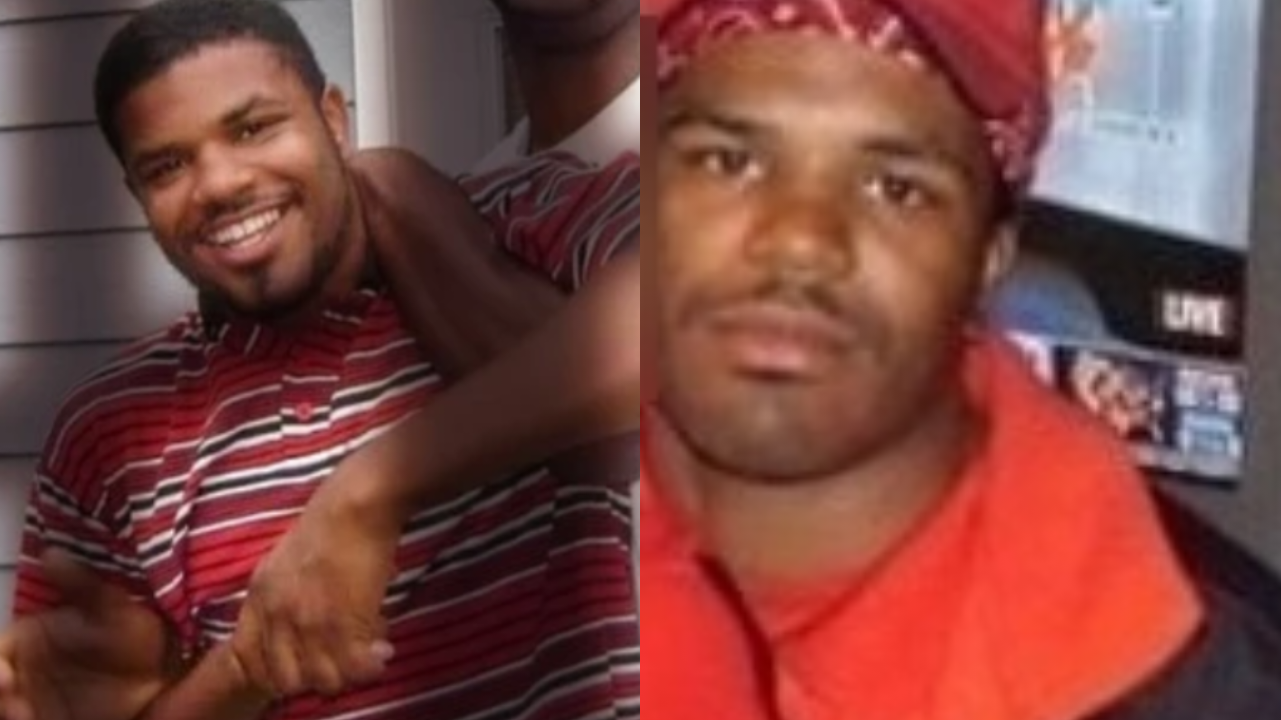

Leonard Coleman was found guilty of murdering Kimberly Mixon in Mobile County, Alabama on December 9, 2011.
Mixon, 36, was killed in December 2010 after an intruder entered her home, fatally shooting the woman.
Authorities said Coleman was the intruder who killed Mixon, the mother of his young son. That son, a then vulnerable 4-year-old, was the only witness to the crime and whose testimony would ultimately convict his father.
Leonard Coleman’s case
Authorities built a case around what the child said he witnessed and phone records that raised a few questions.
Prosecutors said Coleman called Mixon incessantly and lashed out in a fit of rage after Mixon denied his advances. Their relationship was done and she only wanted to co-parent. But authorities said Coleman didn’t want to accept that.
After Mixon was murdered, phone records show Coleman never called her again, leading prosecutors to surmise he knew she was dead, because he killed her.
But Coleman vehemently denies those claims saying he and Mixon were on good terms. That fateful day, he dropped off his son and never heard from the mother of his child again. Much to his surprise, he was now a prime murder suspect.
Leonard Coleman believes he was framed
During the course of the investigation, Coleman believes he was framed for a few reasons.
One, he claims a detective during interrogations told him “he would make the charges stick and he would become another Black statistic”. Two, he was the only person pursued in the case. Three, his defense claims the 4-year-old was coached and often repeated words due to a speech and developmental disability.
Witness testimony
During trial, the defense attorney for Coleman called in an expert witness to explain the child’s condition.
Kelli Rigney-Wolfe, a speech pathologist who worked with the boy for several months during the case, challenged the accuracy of a transcript of the child’s interview that officials provided the jury. She also testified that the boy appeared to exhibit signs during the interviews of a speech defect known as echolalia, a condition in which a person repeats words or phrases he has heard without any genuine understanding of their meaning.
Rigney-Wolfe ascertained that those mistakes could be evidence of the child’s speech problems.
During the interviews, when an officer asked the child if his brother or sister was in the house at the time of the shooting. He answered “yes” both times, although he was alone when police arrived.
“Looking at this transcript, it’s just an automatic response for him,” Rigney-Wolfe testified.
Throughout the tapes, the child is difficult to understand. At some points, his language is just unintelligible, reports AL.com. Rigney-Wolfe told jurors that such “jargon speech,” or gibberish, is another characteristic of his condition.
Jurors also saw a videotaped phone call that Coleman made in custody to his uncle. During that call, Coleman denied wrongdoing. “They’re trying to frame me,” he said on the call.
Based on the speech pathologist’s testimony, the defense argued the child’s testimony was simply not good enough.
But the defense’s position didn’t stick. A majority all white jury believed the child and convicted Coleman of murder on December 09, 2011. On January 5, 2012, he was sentenced to life in prison and is serving his time at St. Clair Correctional facility in Alabama.
Fighting for an exoneration
Leonard Coleman has been fighting for more than 10 years to clear his name of murder. He did it before after being charged in 2017 for a rape officials said happened in 2003. He represented himself and was acquitted of all charges. Can he do it again?
Outside of the prison walls, his wife has been on a crusade to prove his innocence. “There are just too many holes in this story,” said Mrs. Coleman.
Mrs. Coleman started a campaign on social media for Leonard’s defense. She has successfully amassed more than 17,000 signatures on change.org and is speaking to anyone she can to get their voice heard.
They are fighting and a new revelation may help Leonard’s case.
In 2020, two men came to Leonard’s uncle and said the real perpetrator confessed to them of carrying out the murder. On October 26, 2020, they put their official testimonies on file, with M and M Investigations.
But there’s a dilemma, the alleged confessor is dead after taking his own life.
Despite this, the evidence was filed with the Mobile County Circuit Court, under District Attorney Ashley Rich, on April 20, 2021.
Rich filed a motion on August 10, 2021 to have the new evidence dismissed as hearsay. However, a judge denied the state’s motion and an evidentiary hearing will take place on July 29, 2022.
It is a beacon of hope for Leonard who just can’t comprehend why he’s behind bars for a crime he says he didn’t commit.
In 2021, in a two hour interview with FairPlay, Coleman recounts what he says what happened that day. It’s a striking tale, if you’re willing to listen.
No matter your position or what you believe, it’s still the responsibility for our justice system to seek the truth.
There are thousands of innocent people sitting in prison for crimes they didn’t commit, and everyday we see people, especially Black men, exonerated.
The Colemans believe that’s the case here and are speaking out to get their voice heard.
Mrs. Coleman sat down with Unheard Voices, speaking candidly on the case and the plight towards exonerating Leonard.
Check out the video:
Discover more from Unheard Voices Magazine®
Subscribe to get the latest posts sent to your email.













University of Maryland Tennis Club issues public apology after racist imagery sparks backlash

Mississippi Attorney General says officer was justified in shooting that killed 1‑year‑old Kohen Wiley

Police veteran begins rare cancer fight after pleomorphic sarcoma diagnosis

Beloved high school teacher killed in Atlanta murder‑suicide

North Carolina A&T, UNC Greensboro and Bennett students march nearly an hour after campus voting sites removed

VP of Detroit funeral home found dead days after family said mother was mistakenly cremated

Black Aerospace Professionals Development Director Haifa Baptiste dies in Costa Rica flash flood

Mississippi police make second arrest in death of Black woman found hanging from tree

Justice for Nolan Wells Reward Fund raises $300k

California couple welcomes rare mixed triplets weighing 19 pounds total, nearly breaking world record

Woody Shaw’s Avant‑Garde ‘Song of Songs’ returns to vinyl after 50 years through Jazz Dispensary’s Top Shelf Series

Kansas City’s Copper Boyz Ranch provides youth violence‑prevention through horsemanship

Nolan Wells’ family demands ‘thorough’ investigation: “What we’ve been told does not make sense”

Peabo Bryson, Grammy‑winning voice behind two Disney classics, dies at 75

OWN greenlights first-ever ‘Belle Collective’ spinoff Belle Collective: Birmingham





-

 In Memoriam2 weeks ago
Boston rapper Rahim “V Knuckles” Muhammad dies at 46 after fight with brain cancer
-
 In Memoriam2 weeks ago
Major Jewel McDonald, oldest known living man in the U.S., dies at 110
-
 In Memoriam2 weeks ago
Curtis Flowers, Mississippi man wrongfully convicted after being tried for the same killings 6 times, dies at 56
-

 New Jersey2 weeks ago
New Jersey mom demands answers after 4‑year‑old son died at daycare
-

 Real Voices2 weeks ago
Woman dies after stopping to help trapped driver of flipped car on interstate
-
 Culture2 weeks ago
Black Public Media to premiere “The Morgue Twins,” spotlighting twin NYC mortuary technicians
-

 Health & Wellness2 weeks ago
Teen brother to donate lifesaving bone marrow to younger sister battling sickle cell
-
 Black Excellence2 weeks ago
Happy Birthday! Opal Lee, known as the “Grandmother of Juneteenth”, turns 100