
Education
The League of Women Voters
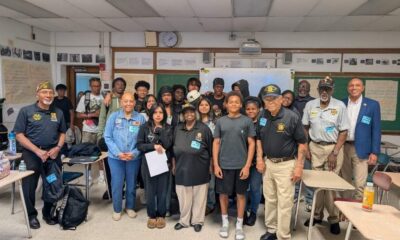
I had the privilege of recently having the League of Women Voters conduct a presentation for my 7th grade advanced social studies class.


Through my supervisor, Ms. Janice Kroposky, I had the privilege of recently having the League of Women Voters.
The organization conducted a presentation for my 7th grade advanced social studies class. The presenters Patricia Supplee, Luisa Paster, Agnes Roche, and Beth Andrea Stevens, created an interactive lesson on suffrage.
League of Women Voters presentation
Avatar
To begin with, I assigned each student an avatar. Each avatar represented a person with distinct characteristics. During the League’s presentation, my students then decided where their assigned person fit within the historical moments being shown.
Since we were remote learning, they accomplished this by first beginning with their icons on. Then when they thought their person belonged in that time in history, my students would turn off their icon to reveal their face.
League of Women Voters on Suffrage
The League’s presentation went into many areas in history. It began with the meaning of the word suffrage (right to vote). Then why was it important that we vote. The presentation showed that everyone should vote and that all elections were important. It was important that people vote in all elections from the presidency, to members in congress, and to the governor of our state so that everyone would be properly represented. Ideas on why people vote was shown.
Here was that list:
- Environment
- Immigration
- International Relations
- Social Justice
- Education
- Taxes
- Covid 19
- Stop gun violence
League of Women Voters on American Revolution
From there, the presentation went into the time of the American Revolution. It was mentioned that Great Britain saw voting as opposing the crown. However, after the American Revolution the Founding Fathers had to design the rules for voting and this took place around 1789.
Voting during the American Civil War
The timeline presentation then went into who was eligible to vote during the American Civil War, the 19th Amendment (which gave women the right to vote), the 15th Amendment being challenged by the Jim Crow Laws, the importance of the Voting Rights Act of 1965, and the 26th Amendment during the Vietnam war which lowered the voting age to 18.
Furthermore, besides African Americans and women, the Suffrage presentation went into the hardships that many other groups went through trying to gain their right to vote. Those groups were Asian and Native Americans.
In closing my supervisor and myself would like to thank the League of Women Voters for giving our 7th-graders a hands-on civics lesson and walk through history about the struggle of people to gain the right to vote.
Real stories. Real impact. Straight to your inbox. Join thousands others. Click here to subscribe to our newsletter today!
Want to tell your story, send a news tip or report a correction? Contact us at [email protected]
Follow us on Facebook, X, TikTok, Instagram, News Break
Discover more from Unheard Voices Magazine®
Subscribe to get the latest posts sent to your email.










Mississippi police arrest man in Tasia Fortune homicide case

Don Lemon to launch 24/7 Don Lemon Channel

OWN’s ‘Ready to Love’ heads to Chicago for new season premiering Oct. 2

Former HOT 97 radio host Timothy “Buc Wild” Joseph dies at 47

Kitchen + Kocktails by Kevin Kelley to open 10,000‑square‑foot Times Square restaurant on Oct. 3

Mississippi woman vanishes after trip to West Virginia as family urges public to help find her

Viral Waffle House employee says the company fired him

In Memoriam: Jason Arday, PhD

Florida woman won’t face charges after fatally shooting man in Walmart parking lot

Sean Grayson, former Illinois Deputy convicted in Sonya Massey killing, dies at 32

Woody Shaw’s Avant‑Garde ‘Song of Songs’ returns to vinyl after 50 years through Jazz Dispensary’s Top Shelf Series

Kansas City’s Copper Boyz Ranch provides youth violence‑prevention through horsemanship

Nolan Wells’ family demands ‘thorough’ investigation: “What we’ve been told does not make sense”

Peabo Bryson, Grammy‑winning voice behind two Disney classics, dies at 75

OWN greenlights first-ever ‘Belle Collective’ spinoff Belle Collective: Birmingham





-
 Black and Missing7 days ago
Mississippi woman vanishes after trip to West Virginia as family urges public to help find her
-
 Social Justice1 week ago
Florida woman won’t face charges after fatally shooting man in Walmart parking lot
-
 Police2 weeks ago
Arkansas trooper pulls passenger by locs, punches him after high speed chase
-
 Sports2 weeks ago
College running back dies after collapsing minutes after scoring touchdown
-
 Black and Missing2 weeks ago
Daughter reveals what surveillance footage showed before missing NYC grandma Alisa Goods was found dead
-
 Crime & Justice2 weeks ago
Legal fund opened for Karmelo Anthony’s appellate case
-

 Real Voices2 weeks ago
Mother killed in wrong‑way crash after helping daughter move into FAMU
-
 Crime & Justice1 week ago
12-year-old Maryland boy saved mom’s life by stabbing boyfriend during domestic attack
Pingback: The Struggle For Voting Rights : Martin Luther King Jr.