
Crime & Justice
Tennessee death row inmate cries out in pain during execution as state reportedly didn’t disable defibrillator
Officials at Riverbend Maximum Security Institution in Nashville pronounced Byron Black, 69, dead at 10:43 a.m., about 10 minutes after he received a single dose of pentobarbital, according to the Tennessee Department of Correction.

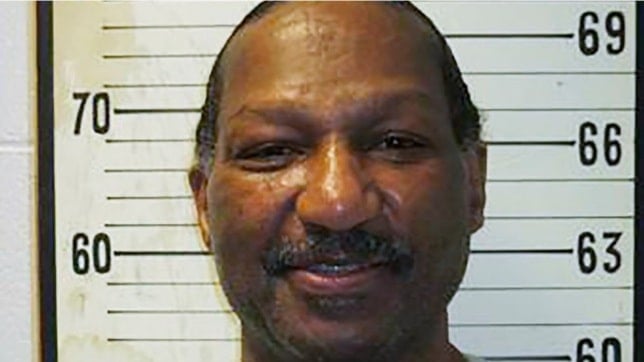
A Tennessee death row inmate cried out in pain during his lethal injection after the state reportedly refused to deactivate his implanted defibrillator.
Details: Tennessee death row inmate Byron Black executed
Officials at Riverbend Maximum Security Institution in Nashville pronounced Byron Black, 69, dead at 10:43 a.m., about 10 minutes after he received a single dose of pentobarbital, according to the Tennessee Department of Correction.
“Oh, it’s hurting so bad,” Black moaned, his hands and chest restrained, as the lethal chemicals coursed through his body. His spiritual advisor, who was singing and praying over him, whispered: “I’m so sorry. Just listen to my voice.”
What led to the conviction
Black was convicted in the 1988 triple homicide of his girlfriend, Angela Clay, 29, and her two daughters, Latoya, 9, and Lakeisha, 6. Prosecutors said he fatally shot all three in their Nashville apartment in a jealous rage. He committed the horrific crime while on work-release for shooting Clay’s estranged husband. The crime rocked the community and led to his death sentence.
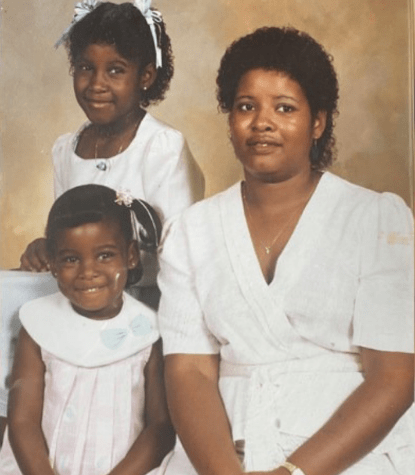
Family handout
Clay’s sister, Linette Bell, issued a statement after the execution. “His family is now going through the same thing we went through 37 years ago. I can’t say I’m sorry because we never got an apology.”
Defibrillator controversy
In the weeks leading up to the execution, Black’s attorneys pleaded with the state to disable his cardioverter-defibrillator. A small, battery-powered device implanted in his chest to regulate heart rhythm, attorneys warned it could repeatedly shock him as the drugs took effect.
A trial judge issued an order last month to deactivate the device. The goal was to prevent unnecessary pain and prolonged execution. Attorney Kelley Henry said a handheld machine could disable the defibrillator.
But the Tennessee Supreme Court overturned that ruling, stating the lower court lacked authority to issue the order. Gov. Bill Lee also declined to grant clemency.
Black, who was a wheelchair user, suffered from dementia, brain damage, kidney failure, congestive heart failure, and other serious conditions. “Today, the state of Tennessee killed a gentle, kind, fragile, intellectually disabled man in a violation of the laws of our country simply because they could,” Henry said.
The medical examiner will review the defibrillator as part of Black’s autopsy.
Black’s execution was the second carried out in Tennessee since May, ending a five-year hiatus in the state’s use of capital punishment. He becomes the 28th person executed in the U.S. this year the highest annual total since 2015.
Real stories. Real impact. Straight to your inbox. Join thousands others. Click here to subscribe to our newsletter today
Discover more from Unheard Voices Magazine
Subscribe to get the latest posts sent to your email.






In Memoriam: Demond Wilson, ‘Sanford and Son’ Star (1946 – 2026)

New Brunswick, NJ 16-year-old shot and killed inside home

St. Thomas Carnival 2026 dates announced

Legal Defense Fund calls on federal leaders to condemn violence against public officials and cease inciteful rhetoric

‘The Blind Side’ actor Quinton Aaron’s GoFundMe surpasses goal

South Carolina midwife Dr. Janell Green Smith dies after childbirth complications

GoFundMe launched for daughters of Keith Porter after fatal shooting by off-duty ICE agent

OWN greenlights first-ever ‘Belle Collective’ spinoff Belle Collective: Birmingham

Rising New Jersey boxer struck, killed by car, prosecutor says

Family of Los Angeles man fatally shot by off-duty ICE agent demands answers
OWN greenlights first-ever ‘Belle Collective’ spinoff Belle Collective: Birmingham

Hazel Scott’s legacy returns to Harlem in free outdoor film screening

Olympic Gymnast Frederick Richard sets world record, raises $50K for Ugandan youth

Renee Ferguson, trailblazing investigative journalist, dies at 75

“AfroPoP Digital Shorts” returns to the land with “Sweet Samara,” climate and abolitionist film




-
 Black Excellence2 weeks ago
Dr. Gladys West, GPS pioneer whose calculations transformed modern navigation, dies at 95
-

 In Memoriam1 week ago
Remembering Alex Jeffrey Pretti: A life rooted in care and service
-

 Community2 weeks ago
Florida bride grieves fiancé’s death as venue refuses refund, GoFundMe launched
-

 Crime & Justice2 weeks ago
White Mississippi man cleared in Black boy’s, 10, hit-and-run death appears to spit at victim’s family
-

 Community2 weeks ago
Arkansas siblings lean on each other after mother’s sudden death from brain aneurysm
-

 In Memoriam2 weeks ago
GoFundMe launched for son of Washington D.C. officer killed after being struck while aiding stranded driver
-

 Community2 weeks ago
Family says masked plainclothes Newark, N.J. officers fired at car pulling away, killing man
-

 Crime & Justice2 weeks ago
Former Nickelodeon star Kianna Underwood dies at 33 after Brooklyn hit‑and‑run