
Culture
Buried history: Documentary uncovers Black slave cemetery hidden under Staten Island shopping center
The site, known as Cherry Lane Cemetery, served as a burial ground for enslaved and formerly enslaved Black residents beginning in the 1850s. It eventually became the resting place for an estimated 1,000 people.

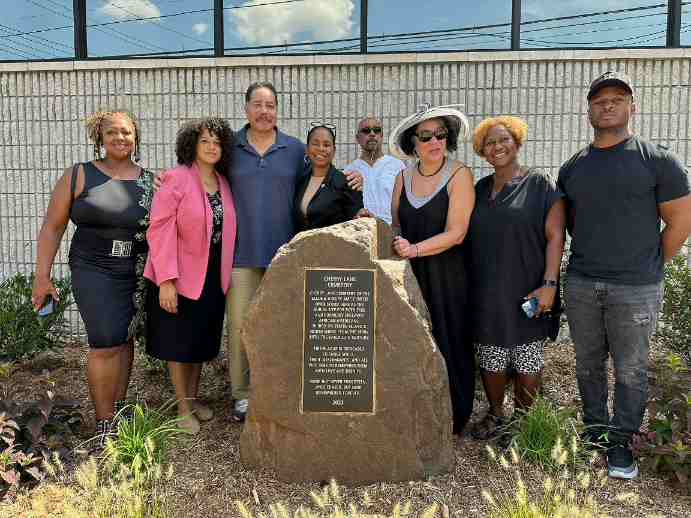

A new documentary will uncover a historic African American cemetery in Staten Island that was buried under concrete and later turned into a strip mall, according to a CBS News.
The site, known as Cherry Lane Cemetery, served as a burial ground for enslaved and formerly enslaved Black residents beginning in the 1850s. It eventually became the resting place for an estimated 1,000 people.
The cemetery sat on land attached to a church. Over time, the church was demolished, the property was left unattended and developers moved to build on the site. Court filings argued the land was not a cemetery, despite death certificates listing Cherry Lane as a burial place, the Staten Islander reports. The land was later paved over and redeveloped into what is now the 1440 Forest Avenue Shopping Plaza.
Descendants learn their ancestors lie beneath a strip mall
Documentary filmmaker Heather Quinlan, who is producing American Graveyard, traced descendants of people buried at Cherry Lane Cemetery. Her research revealed that Benjamin Prine, the last formerly enslaved person in New York, is among those interred. Prine died in 1900 at age 106 and was noted for living across three centuries, serving in the War of 1812 and becoming Staten Island’s first stagecoach driver, according to a biography written by The New York Times.
Prine’s descendants, including Ruth Ann Hills and David Thomas, told WPIX New York they were unaware their ancestor was buried beneath the strip mall. Hills described her reaction to learning the truth:
“They put them under cement and just paved over like they were nothing.”
Thomas said seeing the site today is painful:
“I just think it’s a desecration… Cars running over, people walking over. It’s just plain wrong.”
Community pushes for recognition and preservation
WPIX reports local advocates and descendants have worked with city officials to secure recognition for the cemetery. Their efforts led to the street being renamed Benjamin Prine Way and the creation of a memorial garden beside the Santander Bank that anchors the plaza. A cherry tree and memorial sign now mark the site.
Additionally, an exhibit titled Black Cherry Lane opened at Empire Outlets on October 1, reports The Staten Islander. The exhibit highlights the cemetery’s history, the legal battle that allowed development and the ongoing push for preservation. Plans include ground‑penetrating radar testing and potential exhumation if remains are confirmed.
Documentary aims to uncover full history
Quinlan’s documentary examines how the cemetery disappeared from maps, how developers gained approval to build and why families were unable to stop the construction. She said many descendants lived close to the site but had no knowledge of its history.
The film also explores similar cases, including African American burial grounds paved over in lower Manhattan.
Ongoing efforts to honor those buried
Advocates continue pushing for full recognition of Cherry Lane Cemetery and greater transparency about who is buried beneath the plaza. Descendants say the memorial is a start but does not fully address the loss of the burial ground.
The documentary and exhibit aim to restore the cemetery’s history and ensure the stories of those buried there are not erased.
Discover more from Unheard Voices Magazine®
Subscribe to get the latest posts sent to your email.










Historic 2026 election wins break barriers as Black women help shape midterm results

Bay Area woman struck by car driven by two children walks again after traumatic brain injury

Missing 10-year-old Philadelphia girl found dead in car trunk, foster mother charged with murder

Marcel Johnson’s GoFundMe surpasses $380,000 as supporters rally around family after his death

Pregnant mother of four killed in Spirit Halloween shooting in Northern California

Boston rapper Rahim “V Knuckles” Muhammad dies at 46 after fight with brain cancer

Major Jewel McDonald, oldest known living man in the U.S., dies at 110

Curtis Flowers, Mississippi man wrongfully convicted after being tried for the same killings 6 times, dies at 56

New Jersey mom demands answers after 4‑year‑old son died at daycare

Teen brother to donate lifesaving bone marrow to younger sister battling sickle cell

Woody Shaw’s Avant‑Garde ‘Song of Songs’ returns to vinyl after 50 years through Jazz Dispensary’s Top Shelf Series

Kansas City’s Copper Boyz Ranch provides youth violence‑prevention through horsemanship

Nolan Wells’ family demands ‘thorough’ investigation: “What we’ve been told does not make sense”

Peabo Bryson, Grammy‑winning voice behind two Disney classics, dies at 75

OWN greenlights first-ever ‘Belle Collective’ spinoff Belle Collective: Birmingham





-
 Social Justice2 weeks ago
Black toddler reportedly overlooked at Connecticut library event, viral video sparks investigation
-

 New Jersey2 weeks ago
West Orange mayoral candidate under investigation after sign removal allegations but she says she had permission from the property owner to remove them
-
 Crime & Justice2 weeks ago
North Carolina family mourns 11-year-old Kylen Baldwin killed in hit-and-run scooter crash
-
 Social Justice2 weeks ago
Late Cambridge professor Jason Arday cleared of plagiarism again
-

 Culture2 weeks ago
Black Public Media’s “AfroPoP” series presents “Paradox,” a film examining Minneapolis’ policing history
-

 Sports2 weeks ago
Police called after 3‑year‑old soccer phenom dominates Florida youth game, family alleges
-
 Health & Wellness2 weeks ago
Louisiana teen becomes first child functionally cured of sickle cell disease
-
 Sports1 week ago
Jay-z’s Roc Nation Sports to reportedly send 3‑year‑old soccer phenom to Spain for training