
Opinions
The arrests of journalists who covered Minnesota church protest is an attack on independent journalism
The arrests have press‑freedom advocates warning that the government is crossing a dangerous line.

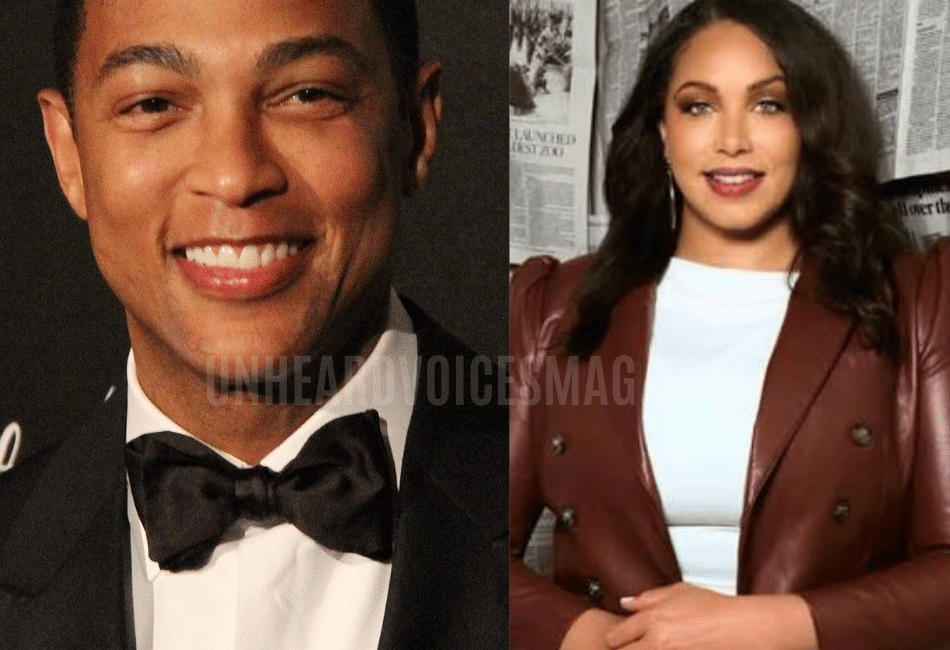

Federal authorities arrested and charged journalists Don Lemon, Georgia Fort, Trahern Jeen Crews, and Jamael Lydell Lundy in connection with their coverage of a Jan. 18 protest at a St. Paul, MN church.
Journalists Arrested and Charged for Covering MN Church Protest
Lemon entered custody Thursday night in Los Angeles, where he prepared to cover events surrounding the Grammy Awards.
Fort’s arrest unfolded Friday morning at her Minnesota home, where officers took her into custody in front of her children shortly after she briefly livestreamed on Facebook.
During the livestream, she told viewers that federal agents were at her door with an arrest warrant. She ended the video moments before surrendering.
“This is all stemming from the fact that I filmed a protest as a member of the media,” Fort said before her arrest.
“We are supposed to have our constitutional right to film as members of the press. Do I have my First Amendment right because now federal agents are at my door arresting me for filming the church protest a few weeks ago,” she continued.
The arrests have press‑freedom advocates warning that the government is crossing a dangerous line. They argue the charges threaten First Amendment protections and send a chilling message to media, especially journalists who report outside traditional power structures.
Protest at Minnesota Church Leads to Arrests
The charges stem from a demonstration inside Cities Church, where protesters gathered during “Operation Pullup” over allegations that a pastor serves as a high‑ranking U.S. Immigration and Customs Enforcement (ICE) official. Lemon and Fort documented the event as it unfolded. During their broadcast, both repeatedly stated they were present in their capacity as journalists.
Nine People Charged After the Protest
Federal prosecutors charged nine individuals in total. Among the first were civil rights attorney Nekima Levy-Armstrong, St. Paul school board member Chauntyll Allen, and William Kelly. Levy-Armstrong called the arrest “political retaliation”.
The arrests of the four journalists followed. The latest was a Temple University student who assisted Don Lemon by informing him about the event as a member of the press.
They were all released on personal recognizance bonds.
A magistrate judge initially dismissed charges against five of them, including Lemon, citing insufficient evidence. Despite that ruling, the Justice Department brought the case before an appeals court twice, which also declined to indict. On a fourth attempt, the department presented the case to a grand jury, which returned indictments.</p>
The DOJ’s Explanation and Why It Raises Alarms
A Justice Department official said Lemon, Fort, and the others conspired to deprive others of their civil rights and violated the Freedom of Access to Clinic Entrances (FACE) Act. The statute is often used to prosecute abortion‑clinic blockades, also covers houses of worship.
A first‑time FACE Act violation carries up to a year in prison. The conspiracy charge carries up to ten.
Prosecutors argue the group “interfered with the congregation’s ability to worship.” Yet applying the FACE Act to journalists documenting an event remains virtually unheard of. Press‑freedom groups say the DOJ’s interpretation stretches the law beyond its intent and risks criminalizing standard reporting.
Abbe Lowell, Lemon’s attorney, in a statement called the charges an “unprecedented attack on the First Amendment.” He said Lemon was present solely as a journalist and argued the arrests are a “transparent attempt” to divert attention from recent federal
enforcement actions in Minneapolis that resulted in two civilian deaths.
The White House Response Intensified the Backlash
The administration’s response to the arrest quickly drew scrutiny. The White House posted a photo of Lemon on X with the caption “When life gives you lemons,” capped with a chains emoji — an unusually pointed message for an official account.
The tone suggested something beyond routine public‑safety messaging. If the stated priority is protecting parishioners, the administration’s rhetoric raises a different question: what is this really about?
Press‑Freedom Groups, Media Organizations Condemn the Arrests
Various media organizations and press‑freedom groups across the country condemned the arrests, warning that they threaten core constitutional protections.
CNN, Lemon’s former employer, issued a blistering statement criticizing the Trump administration:
“The FBI’s arrest of our former CNN colleague Don Lemon raises profoundly concerning questions about press freedom and the First Amendment. The Department of Justice already failed twice to get an arrest warrant for Don and several other journalists in Minnesota, where a chief judge found there was ‘no evidence’ of criminal behavior involved in their work.”
Throughout the debate, few have questioned the charges against those accused of organizing or demonstrating at the protest. Anyone who plans a demonstration understands there’s always a risk of arrest.
As freedom of religion believers, the disruption at Cities Church was difficult to watch. It was peaceful, yet undeniably intrusive.
As independent journalists, the presence of media was essential. The public has every right to know what’s going on, no matter the political aisle.
Freedom of religion is a right, just as freedom of the press is.
The Persecution of Journalism
The treatment of Crews, Fort, Lemon, and Lundy raises a serious question: What is the true motive?
New Hope Missionary Baptist Church in Atlanta
About a week before the Cities Church protest, a pastor disrupted worship at New Hope Missionary Baptist Church in Atlanta, a church led by African American pastor Jamal Bryant. Bryant is also known for organizing the Target boycott after the retailer rolled back DEI initiatives.
The incident at New Hope prompted heightened security. What followed is telling.
After the Cities Church protest, U.S. Attorney General Pam Bondi explicitly said, “We do not tolerate attacks on places of worship.”
However, the pastor who disrupted service at New Hope was neither arrested nor faced federal charges. The video of the protest went viral. Moreover, the incident was covered locally. The protest was widely known, so lack of awareness can’t explain the decision not to pursue criminal charges.
Freedom of Press isn’t so free for POC
Lemon, once a primetime face at CNN, now operates as an independent journalist through his Lemon Media Network. Fort is a Minnesota-based independent journalist and owner of BLCK Press. Both cover socially conscious, political issues. Combined, they have more than 50 years of award-winning journalism experience.
It is no secret that Lemon and Fort have been openly critical of the Trump administration and its ICE enforcement. If they aligned with the administration’s views, would they have been arrested for covering a protest?
This is not about their presence as journalists. It is about silencing voices that challenge power. It is about suppressing stories that run against the grain. Morever, it is pointedly clear what all the independent journalists arrested have in common besides their profession.
Unheard Voices Magazine’s Story
Unheard Voices began for this very reason. Twenty‑two years ago in Neptune, NJ, a respected resident launched a small newsletter to amplify everyday people, uplift Black voices, and expose racism and policing issues in the township. He sold it for one dollar, placing copies in corner stores throughout Asbury Park, NJ.
The pilot
One of Unheard Voices first stories described a resident who watched a Neptune officer search through a neighbor’s garbage. The scene echoed his own experience 15 years earlier in the 90s, when police searched his trash after he and his family moved into their newly purchased home. He was a computer scientist. His wife was an accountant. They had moved into the suburban mid to upper middle-class neighborhood to celebrate their success, yet they say they faced surveillance instead.
It first began when the husband said he could feel someone looking at him while he was in the garage. The husband slowly turned around and said he spotted the police looking at him. The Neptune officer was staking out in the parking lot of a vacant house across the street.
The husband immediately showed his wife. They were both shocked. The husband decided to paint the garage windows green to match the door and to keep the police from looking inside of their place of residence. But that wasn’t end of their interaction with the officer.
The police quickly reacted to the couple painting their garage’s windows. A few days later, some items from the family’s garbage were meticulously placed on the street signaling to the family someone was there. Furthermore, sending a strong “welcome to the neighborhood” message.
A neighbor told the family they had watched the officer by their garbage can.
So when this resident saw the same behavior years later, he knew the community needed to hear the truth. That moment pushed him to start Unheard Voices.
The evening after the publication launched, Neptune Township police followed the founder and his children nearly home from Dunkin Donuts. The officer never stopped them. It was intimidation meant to silence them.
But Unheard Voices never wavered.
Freedom of the Press Should Not Be Conditional
Today, Unheard Voices has grown from a local newsletter to a national platform. It continues to cover socially conscious issues while also amplifying Black voices, everyday people, celebrity voices in crisis, and the unheard, because these stories matter.
Journalism, regardless of its platform, angle, or political stance, deserves respect, not persecution.
The United States relies on a free press to monitor government power. Officials may dislike coverage, but journalists should not be punished for documenting events.
Crews, Fort, Lemon, and Lundy were doing their jobs. Their arrests undermine trust and create fear among reporters, especially independent journalists, who cover sensitive stories.
This moment demands accountability. Press freedom cannot survive if journalists face arrest for routine reporting. The public deserves transparency, and journalists must remain free to document events without fear of retaliation.
After her release, Fort said, “Do we still have a constitution?”
Someone replied, “Or don’t we?”
Perhaps not, for those who refuse to conform.
Discover more from Unheard Voices Magazine®
Subscribe to get the latest posts sent to your email.











Family prepares to bury two young Daytona Beach brothers found dead in pond

Xavier Ochsner College of Medicine earns preliminary accreditation, becoming nation’s fifth historically Black medical school

New Jersey woman who outsmarted serial killer and escaped dies at 44

87-year-old civil rights activist brutally beaten and robbed in home invasion

Family of Cal State Fullerton student who died at unaffiliated fraternity event pushes for safety reform

VP of Detroit funeral home found dead days after family said mother was mistakenly cremated

Black Aerospace Professionals Development Director Haifa Baptiste dies in Costa Rica flash flood

Mississippi police make second arrest in death of Black woman found hanging from tree

Sister Betsy Jean Farrakhan, eldest daughter of Minister Louis Farrakhan, dies

Justice for Nolan Wells Reward Fund raises $300k

Woody Shaw’s Avant‑Garde ‘Song of Songs’ returns to vinyl after 50 years through Jazz Dispensary’s Top Shelf Series

Kansas City’s Copper Boyz Ranch provides youth violence‑prevention through horsemanship

Nolan Wells’ family demands ‘thorough’ investigation: “What we’ve been told does not make sense”

Peabo Bryson, Grammy‑winning voice behind two Disney classics, dies at 75

OWN greenlights first-ever ‘Belle Collective’ spinoff Belle Collective: Birmingham




-
 Social Justice2 weeks ago
Justice for Nolan Wells Reward Fund raises $300k
-
 Culture2 weeks ago
Buried history: Documentary uncovers Black slave cemetery hidden under Staten Island shopping center
-
Social Justice2 weeks ago
Atlanta University Center students marched to demand justice for Nolan Wells
-

 Black and Missing2 weeks ago
What happened to Chantel Brooks? Police, family continue to seek answers for woman missing since July
-
 Social Justice2 weeks ago
Nolan Wells’ family, national leaders renew call for federal investigation into teen’s death
-
 In Memoriam1 week ago
Boston rapper Rahim “V Knuckles” Muhammad dies at 46 after fight with brain cancer
-
 In Memoriam1 week ago
Major Jewel McDonald, oldest known living man in the U.S., dies at 110
-
 Music2 weeks ago
UK soul singer Scarlett Fagan releases video for new single ‘Awaken’