
Culture
Burger King employee wears Blackface, tells customer, “I just want to be Black”
A viral video from a Burger King restaurant has reignited discussions about blackface after a white woman appeared with her face painted dark on Halloween.



A viral video from a Burger King restaurant has reignited discussions about blackface after a white woman appeared with her face painted dark on Halloween. When a Black customer questioned her appearance, she offered an explanation that raised even more questions.
According to the video, the woman, who reportedly works at a Burger King in Minnesota, told the customer, “I’m just black.”
When she questioned whether she thought her appearance was appropriate, she reportedly responded that it was fine “as long as you have a good heart.”
She eventually explained, “Well, no, I just want to be black.”
The customer then asked an important question: “Why would you want to be black? Do you know the struggles that we go through as Black people?”
The woman initially indicated that she understood. However, she ultimately acknowledged that she did not.
Perhaps she intended to portray a Black emoji or simply imitate a particular appearance for Halloween and just doesn’t understand its implication. The video does not establish her precise intention.
Nevertheless, even that explanation would not make the costume appropriate.
Let me explain why.
Blackface is not a Halloween costume. It is not cultural appreciation. And it is not an innocent way to celebrate Black culture.
Yet, in 2026, we are still having this conversation.
Blackface Has a Deep History Rooted in Minstrel Shows
To understand why blackface remains offensive, people must understand its history.
Blackface became popular through American minstrel shows during the 19th century. White performers darkened their faces using burnt cork, greasepaint and shoe polish.
They then portrayed exaggerated caricatures of Black people for entertainment.
One of the earliest and most influential performers was Thomas Dartmouth Rice.
In 1830, Rice introduced his popular Jim Crow character, performing exaggerated dances, songs and mannerisms. His performances helped establish blackface minstrelsy as a major form of American entertainment.
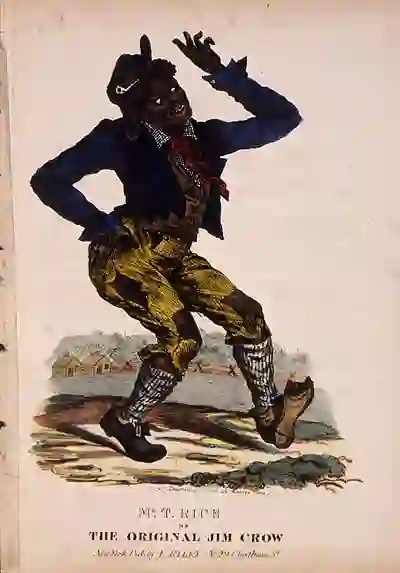
Jim Crow (Public Domain via Wikimedia Commons)
By 1843, the Virginia Minstrels had helped popularize the full minstrel-show format. The group included Dan Emmett, Frank Brower, William Whitlock and Richard Pelham.
Their performances relied on exaggerated Black stereotypes, including depictions of enslaved people as ignorant, foolish and happy with plantation life.
These portrayals ignored the brutality of slavery and reinforced damaging racial perceptions.
The practice continued through subsequent generations of entertainers.
Notable examples as reported by the Los Angeles Times include:
- Al Jolson (1927):Appeared in blackface in The Jazz Singer.
- Fred Astaire (1936): Performed in blackface in Swing Time.
- Judy Garland (1938): Appeared in blackface in Everybody Sing.
- Mickey Rooney (1939): Appeared in a minstrel sequence in Babes in Arms.
- Judy Garland and Mickey Rooney (1941): Performed in blackface in Babes on Broadway.
- Bing Crosby (1942): Appeared in blackface in Holiday Inn.
These performances helped carry minstrel imagery from theater stages into Hollywood and mainstream entertainment.
According to the Smithsonian’s National Museum of African American History and Culture, blackface helped establish stereotypes that portrayed Black people as irresponsible, laughable and inferior.
Those images influenced how generations of Americans viewed Black people.
No, White Chicks or Druski Is Not the Same Thing
And before someone brings up White Chicks or Druski’s viral white skit, let’s address that comparison.
People frequently reference the 2004 comedy starring Shawn and Marlon Wayans when discussing blackface. And as of lately, comedian Druski.
They argue that if Black men can disguise themselves as white women, white people should be able to paint their faces black.
However, the historical context is completely different.

Druski
Druski’s skits use satire and exaggerated characters to poke fun at certain white social groups and behaviors; they do not recreate the historical minstrel tradition of dehumanizing Black people through blackface. The historical context and power dynamics are fundamentally different.
White Chicks features two Black FBI agents disguising themselves as wealthy white women as part of an undercover assignment.
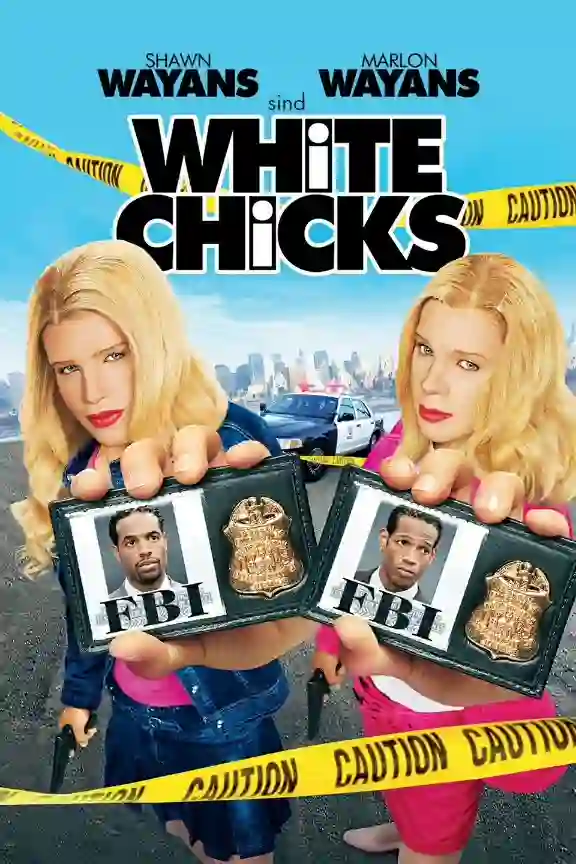
The film uses prosthetic makeup for its comedy storyline. It does not recreate the historical minstrel tradition of white performers darkening their faces to ridicule Black people.
Blackface developed during a period when Black Americans faced slavery, segregation and systematic discrimination.
Minstrel performers used racial caricatures to reinforce stereotypes and entertain audiences at Black people’s expense.
There is no equivalent American history of Black performers using whiteface to establish white people’s racial inferiority through a comparable minstrel tradition.
That distinction matters.
This distinction does not mean every racial impersonation is automatically beyond criticism. Context, intent, execution and historical impact matter. But treating these examples as interchangeable ignores nearly two centuries of history.
Admiring Black Culture Does Not Require Blackface
There is nothing wrong with appreciating Black culture.
People can celebrate Black musicians, entertainers, historical figures, fashion and contributions to society.
However, admiration does not require someone to change their skin color.
More importantly, Black people cannot remove their racial identity when Halloween ends.
They continue navigating a society where race can influence everyday experiences, including employment, education, housing and interactions with law enforcement.
Therefore, turning Black skin into a temporary costume overlooks the experiences and history attached to that identity.
Someone might have good intentions. However, good intentions do not erase historical context.
Blackface has a documented history that stretches back nearly 200 years. That history deserves recognition, not another generation of misunderstanding.
Learn the history. Understand the context. Appreciate the culture.
But leave the blackface out of it, especially on Halloween.
Editorial note: The article does not attribute a motive or racial beliefs to the Burger King employee. It distinguishes the documented exchange from the historical commentary.
Discover more from Unheard Voices Magazine®
Subscribe to get the latest posts sent to your email.









Burger King employee wears Blackface, tells customer, “I just want to be Black”

Flock cameras get it wrong: Virginia mother loses her car after police mistake her vehicle for shooting suspect’s

Family of slain Bronx teen Javits Frimpong demands justice after fatal shooting

Jay-z’s Roc Nation Sports to reportedly send 3‑year‑old soccer phenom to Spain for training

Man accused of fatally shooting beloved married father on GWB now charged with second-degree murder

Justice for Nolan Wells Reward Fund raises $300k

Buried history: Documentary uncovers Black slave cemetery hidden under Staten Island shopping center
Atlanta University Center students marched to demand justice for Nolan Wells

What happened to Chantel Brooks? Police, family continue to seek answers for woman missing since July

Boston rapper Rahim “V Knuckles” Muhammad dies at 46 after fight with brain cancer

Woody Shaw’s Avant‑Garde ‘Song of Songs’ returns to vinyl after 50 years through Jazz Dispensary’s Top Shelf Series

Kansas City’s Copper Boyz Ranch provides youth violence‑prevention through horsemanship

Nolan Wells’ family demands ‘thorough’ investigation: “What we’ve been told does not make sense”

Peabo Bryson, Grammy‑winning voice behind two Disney classics, dies at 75

OWN greenlights first-ever ‘Belle Collective’ spinoff Belle Collective: Birmingham





-
 Community2 weeks ago
Police veteran begins rare cancer fight after pleomorphic sarcoma diagnosis
-
 Community2 weeks ago
NAACP launches National Black Man Voter Day with week of action aimed at mobilizing 100,000 Black men
-

 Crime & Justice1 week ago
Beloved married father killed in apparent road rage shooting on the George Washington Bridge, says prosecutors
-
 Social Justice1 week ago
Couple files racial discrimination lawsuit after real estate broker’s alleged “Ugh. They Are Black” text
-

 Social Justice2 weeks ago
Mississippi Attorney General says officer was justified in shooting that killed 1‑year‑old Kohen Wiley
-
 Real Voices1 week ago
Documentary And Counting explores Black women’s workforce exodus
-

 Social Justice1 week ago
Black toddler reportedly overlooked at Connecticut library event, viral video sparks investigation
-

 Social Justice2 weeks ago
University of Maryland Tennis Club issues public apology after racist imagery sparks backlash