
Crime & Justice
Tennessee death row inmate cries out in pain during execution as state reportedly didn’t disable defibrillator
Officials at Riverbend Maximum Security Institution in Nashville pronounced Byron Black, 69, dead at 10:43 a.m., about 10 minutes after he received a single dose of pentobarbital, according to the Tennessee Department of Correction.

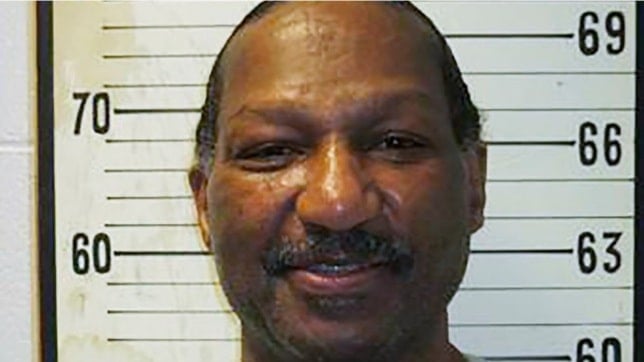

A Tennessee death row inmate cried out in pain during his lethal injection after the state reportedly refused to deactivate his implanted defibrillator.
Details: Tennessee death row inmate Byron Black executed
Officials at Riverbend Maximum Security Institution in Nashville pronounced Byron Black, 69, dead at 10:43 a.m., about 10 minutes after he received a single dose of pentobarbital, according to the Tennessee Department of Correction.
“Oh, it’s hurting so bad,” Black moaned, his hands and chest restrained, as the lethal chemicals coursed through his body. His spiritual advisor, who was singing and praying over him, whispered: “I’m so sorry. Just listen to my voice.”
What led to the conviction
Black was convicted in the 1988 triple homicide of his girlfriend, Angela Clay, 29, and her two daughters, Latoya, 9, and Lakeisha, 6. Prosecutors said he fatally shot all three in their Nashville apartment in a jealous rage. He committed the horrific crime while on work-release for shooting Clay’s estranged husband. The crime rocked the community and led to his death sentence.
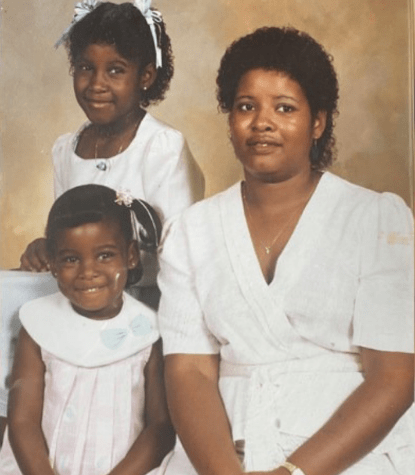
Family handout
Clay’s sister, Linette Bell, issued a statement after the execution. “His family is now going through the same thing we went through 37 years ago. I can’t say I’m sorry because we never got an apology.”
Defibrillator controversy
In the weeks leading up to the execution, Black’s attorneys pleaded with the state to disable his cardioverter-defibrillator. A small, battery-powered device implanted in his chest to regulate heart rhythm, attorneys warned it could repeatedly shock him as the drugs took effect.
A trial judge issued an order last month to deactivate the device. The goal was to prevent unnecessary pain and prolonged execution. Attorney Kelley Henry said a handheld machine could disable the defibrillator.
But the Tennessee Supreme Court overturned that ruling, stating the lower court lacked authority to issue the order. Gov. Bill Lee also declined to grant clemency.
Black, who was a wheelchair user, suffered from dementia, brain damage, kidney failure, congestive heart failure, and other serious conditions. “Today, the state of Tennessee killed a gentle, kind, fragile, intellectually disabled man in a violation of the laws of our country simply because they could,” Henry said.
The medical examiner will review the defibrillator as part of Black’s autopsy.
Black’s execution was the second carried out in Tennessee since May, ending a five-year hiatus in the state’s use of capital punishment. He becomes the 28th person executed in the U.S. this year the highest annual total since 2015.
Discover more from Unheard Voices Magazine®
Subscribe to get the latest posts sent to your email.












Detroit artist K Salt releases new music “Can’t Deny”

Cyclist Tofik Beshir, 19, shows major progress after traumatic training crash in North Carolina

Late Cambridge professor Jason Arday cleared of plagiarism again

Black Public Media’s “AfroPoP” series presents 100th film: “Paradox,” which confronts Minneapolis policing history

Louisiana teen becomes first child functionally cured of sickle cell disease

VP of Detroit funeral home found dead days after family said mother was mistakenly cremated

Justice for Nolan Wells Reward Fund raises $300k

Buried history: Documentary uncovers Black slave cemetery hidden under Staten Island shopping center
Atlanta University Center students marched to demand justice for Nolan Wells

What happened to Chantel Brooks? Police, family continue to seek answers for woman missing since July

Woody Shaw’s Avant‑Garde ‘Song of Songs’ returns to vinyl after 50 years through Jazz Dispensary’s Top Shelf Series

Kansas City’s Copper Boyz Ranch provides youth violence‑prevention through horsemanship

Nolan Wells’ family demands ‘thorough’ investigation: “What we’ve been told does not make sense”

Peabo Bryson, Grammy‑winning voice behind two Disney classics, dies at 75

OWN greenlights first-ever ‘Belle Collective’ spinoff Belle Collective: Birmingham





-

 Culture2 weeks ago
NXT Awards return to Atlanta Oct. 25
-

 Community2 weeks ago
Operation Christmas Child will open drop‑off locations across the U.S
-

 Entertainment2 weeks ago
OWN for the Holidays returns with new movies
-

 Real Voices2 weeks ago
Newly released phone records reveal how Nolan Wells’ friends privately discussed his death
-
 Social Justice2 weeks ago
Family of Cal State Fullerton student who died at unaffiliated fraternity event pushes for safety reform
-

 Music2 weeks ago
Baltimore artist MIDDEKO releases new single “FALLINLUV”
-

 Music2 weeks ago
Baron Von Alias drops “Lost In Translation” with Keith Murray and Tash
-

 Social Justice1 week ago
North Carolina A&T, UNC Greensboro and Bennett students march nearly an hour after campus voting sites removed