
Education
Racial disparities in New Jersey’s criminal justice system by Asbury Park High School student Maria Riano Cruz
Racial disparities in New Jersey’s justice system persist, rooted in history and reinforced by modern policies.

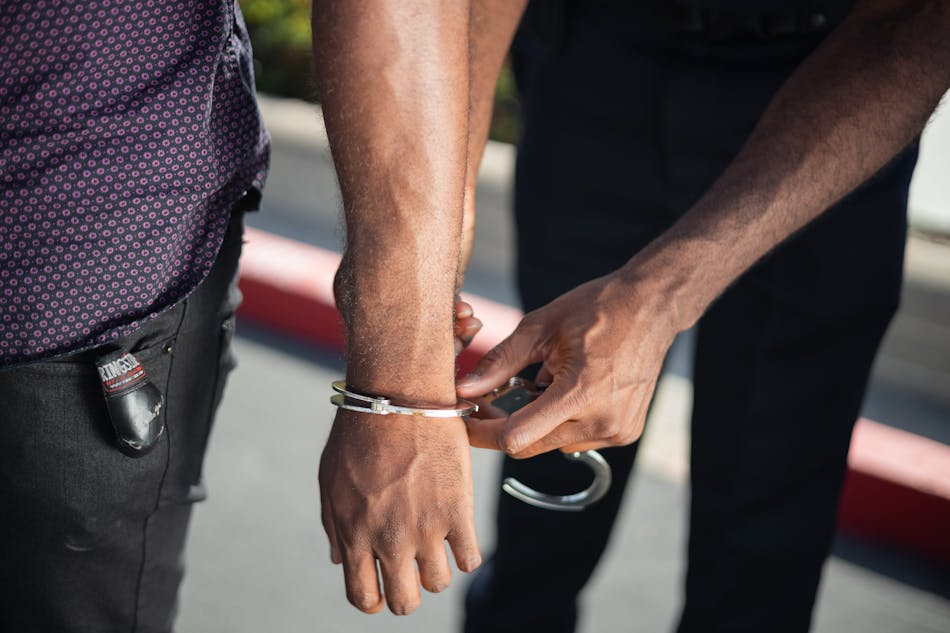

In New Jersey, Black residents continue to face deep racial disparities within the criminal justice system that cannot be explained by crime rates alone. At times, 18.8% were often stopped by police for many reasons, often without justification or without a cause, and are frequently assumed to be associated with drugs, offenses, and other criminal activity.
Racial Disparities in New Jersey’s Criminal Justice System
The injustice done to Black people has always been a long ongoing cycle in New Jersey. The historical roots of systemic racism in the state include discriminatory practices and slavery, such as restrictive covenants and redlining. This contributes to modern criminal justice disparities, as Black residents make up 60% of the interim population despite representing only 15% of the state’s population. African American children in New Jersey are 30 times more likely to be locked up than white children, a disparity rooted in the historical legacy of slavery and its lasting impact on the justice system.
Historical Roots of Inequality
New Jersey was the last Northern state to abolish slavery, using a probationary period until the 13th Amendment was passed. The 13th Amendment was necessary to abolish slavery in the United States, making it illegal nationwide except as a punishment for a crime after conviction. However, this law made it an exception for slavery to continue in a different form. The people needed to figure out how the state was going to fight to give back Black residents’ full rights. As a reaction toward unjust treatment, Governor Walter signed the 1945 Law Against Discrimination, which focused on preventing unfair treatment and enforcing fair employment practices.
Racial Disparities in New Jersey: Persistent Disparities in Policing and Incarceration
Regardless of these attempts, tough-on-crime policies still remain the same, disproportionately targeting Black communities and reinforcing some of the highest racial disparities in the nation. Black residents face high rates of incarceration, juvenile detention, and policing disparities. In spite of the overall prison population, Black adults are still over 12 times more likely to be put away than white residents, while African American youth are five times more likely to be held in juvenile facilities compared to the white youth population.
Studies indicate Black motorists in New Jersey are more likely to be stopped, searched, and subjected to the use of force by law enforcement, even though searches of Black motorists are less likely to yield contraband. These inequalities are due to a mix of systemic, behavioral, and policy-driven factors. New Jersey shows some of the widest racial wealth and opportunity gaps in the United States, reflecting structural disparities in housing, education, and criminal justice.
Racial Disparities in New Jersey: Community-Led Restorative Justice as a Solution
A realistic, big-impact solution capable of creating lasting criminal justice reform for Black New Jerseyans is implementing community-led restorative justice hubs paired with mandatory, pre-legislative racial impact statements. This approach shifts resources from punishment to community-based support, directly confronting the systemic drivers of racial disparities in incarceration. Community-led restorative justice hubs invest in neighborhoods with the highest incarceration rates to provide alternatives to police intervention for nonviolent offenses, mental health support, mediation, and youth mentorship. Mandatory racial impact statements require any proposed criminal law changes in New Jersey to determine and analyze their potential impact on racial disparities before authorizing new laws that could worsen existing inequalities.
Decarceration, Reentry, and Police Accountability
Decarcerating and reentry support includes establishing state-funded reentry programs that provide housing assistance, employment training, restoration of voting rights, and jury service for formerly incarcerated individuals. Police accountability measures strengthen independent local community review boards by expanding their authority to investigate misconduct and by promoting various hiring practices within law enforcement. By focusing on staff diversity, increasing transparency to rebuild community trust, and updating recruitment methods, the state can target underrepresented groups and modernize standards. These efforts are necessary to correct deep-seated economic, social, and structural disparities, including the temporary loss of voting rights or civic participation.
Conclusion
In conclusion, Black New Jerseyans continue to face outstanding disparities within the criminal justice system due to structural inequalities, social barriers, and long-standing economic disadvantages. These obstacles are rooted in historical discrimination and supported by unfair policies and practices. Although New Jersey has made some changes to improve its justice system, many issues remain. Black residents continue to face deep racial disparities within the criminal justice system that cannot be explained by crime rates alone.
Real stories. Real impact. Straight to your inbox. Join thousands others. Click here to subscribe to our newsletter today!
Follow us on Facebook, X, TikTok, Instagram










Memphis man sues city, police over photo taken of his deceased mother

Asbury Park High School: History Seminar

New Jersey police reach $4 million settlement with children of woman killed by ex-husband, a former police officer

Druski new parody mocking conservative women sparks debate

Detroit man convicted of sexually assaulting, killing teen found dead in prison 2 weeks after sentencing
Kendrick Johnson’s parents file $10B lawsuit against federal judges

GoFundMe launched after Alabama mother is fatally shot by husband hours after giving birth

Shaquille O’Neal pays for funeral costs for 12‑year‑old Jada West, Georgia officials say

Family demands justice after Baltimore County man dies after being punched by police officer in violent encounter

12‑year‑old Georgia girl dies after fight outside school bus, family says she was bullied

OWN greenlights first-ever ‘Belle Collective’ spinoff Belle Collective: Birmingham

Hazel Scott’s legacy returns to Harlem in free outdoor film screening

Olympic Gymnast Frederick Richard sets world record, raises $50K for Ugandan youth

Renee Ferguson, trailblazing investigative journalist, dies at 75

“AfroPoP Digital Shorts” returns to the land with “Sweet Samara,” climate and abolitionist film




-
 Community2 weeks ago
Shaquille O’Neal pays for funeral costs for 12‑year‑old Jada West, Georgia officials say
-
 Social Justice3 days ago
New Jersey police reach $4 million settlement with children of woman killed by ex-husband, a former police officer
-

 Education1 week ago
Asbury Park High School: Crossover event esports and history with Tina Watson
-

 Social Justice4 days ago
Jury awards California woman $15 million after supervisor called her n-word
-

 Culture2 weeks ago
Wu‑Tang Clan concert film to screen at The Pinhook as part of Wu‑Tang Wednesday Series
-
 Social Justice7 days ago
Family pleads for Trump’s help bringing severely ill son home from Chinese prison
-
 Crime & Justice4 days ago
Detroit man convicted of sexually assaulting, killing teen found dead in prison 2 weeks after sentencing
-
 Culture3 days ago
Druski new parody mocking conservative women sparks debate
-
 Social Justice2 weeks ago
DOJ moves to dismiss criminal case against ex-officers charged for role in Breonna Taylor’s death
-

 In Memoriam2 weeks ago
In Memoriam: Beloved Showtime at the Apollo co-host Kiki Shepard