
Education
Racial disparities in New Jersey’s criminal justice system by Asbury Park High School student Maria Riano Cruz
Racial disparities in New Jersey’s justice system persist, rooted in history and reinforced by modern policies.

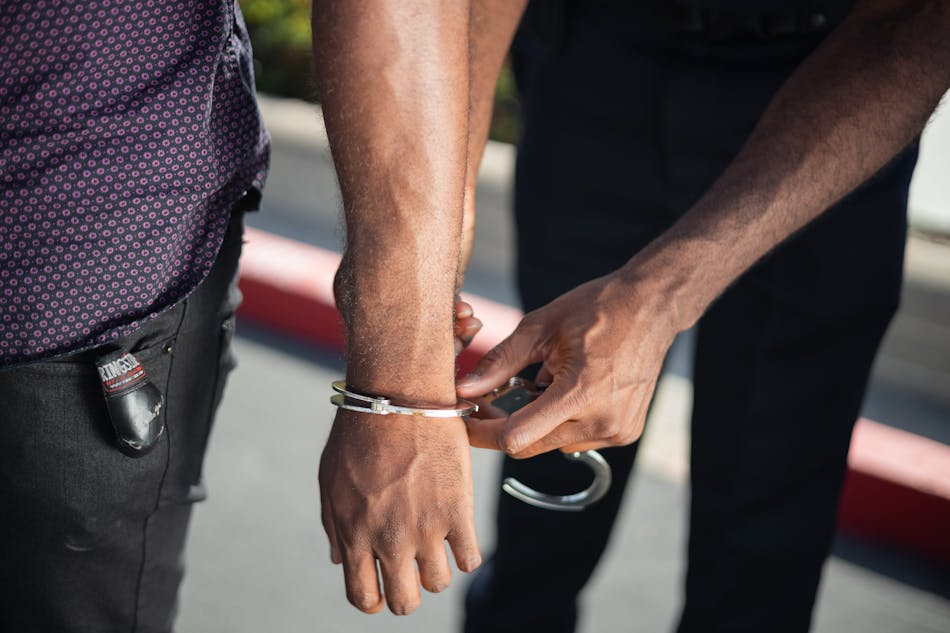

In New Jersey, Black residents continue to face deep racial disparities within the criminal justice system that cannot be explained by crime rates alone. At times, 18.8% were often stopped by police for many reasons, often without justification or without a cause, and are frequently assumed to be associated with drugs, offenses, and other criminal activity.
Racial Disparities in New Jersey’s Criminal Justice System
The injustice done to Black people has always been a long ongoing cycle in New Jersey. The historical roots of systemic racism in the state include discriminatory practices and slavery, such as restrictive covenants and redlining. This contributes to modern criminal justice disparities, as Black residents make up 60% of the interim population despite representing only 15% of the state’s population. African American children in New Jersey are 30 times more likely to be locked up than white children, a disparity rooted in the historical legacy of slavery and its lasting impact on the justice system.
Historical Roots of Inequality
New Jersey was the last Northern state to abolish slavery, using a probationary period until the 13th Amendment was passed. The 13th Amendment was necessary to abolish slavery in the United States, making it illegal nationwide except as a punishment for a crime after conviction. However, this law made it an exception for slavery to continue in a different form. The people needed to figure out how the state was going to fight to give back Black residents’ full rights. As a reaction toward unjust treatment, Governor Walter signed the 1945 Law Against Discrimination, which focused on preventing unfair treatment and enforcing fair employment practices.
Racial Disparities in New Jersey: Persistent Disparities in Policing and Incarceration
Regardless of these attempts, tough-on-crime policies still remain the same, disproportionately targeting Black communities and reinforcing some of the highest racial disparities in the nation. Black residents face high rates of incarceration, juvenile detention, and policing disparities. In spite of the overall prison population, Black adults are still over 12 times more likely to be put away than white residents, while African American youth are five times more likely to be held in juvenile facilities compared to the white youth population.
Studies indicate Black motorists in New Jersey are more likely to be stopped, searched, and subjected to the use of force by law enforcement, even though searches of Black motorists are less likely to yield contraband. These inequalities are due to a mix of systemic, behavioral, and policy-driven factors. New Jersey shows some of the widest racial wealth and opportunity gaps in the United States, reflecting structural disparities in housing, education, and criminal justice.
Racial Disparities in New Jersey: Community-Led Restorative Justice as a Solution
A realistic, big-impact solution capable of creating lasting criminal justice reform for Black New Jerseyans is implementing community-led restorative justice hubs paired with mandatory, pre-legislative racial impact statements. This approach shifts resources from punishment to community-based support, directly confronting the systemic drivers of racial disparities in incarceration. Community-led restorative justice hubs invest in neighborhoods with the highest incarceration rates to provide alternatives to police intervention for nonviolent offenses, mental health support, mediation, and youth mentorship. Mandatory racial impact statements require any proposed criminal law changes in New Jersey to determine and analyze their potential impact on racial disparities before authorizing new laws that could worsen existing inequalities.
Decarceration, Reentry, and Police Accountability
Decarcerating and reentry support includes establishing state-funded reentry programs that provide housing assistance, employment training, restoration of voting rights, and jury service for formerly incarcerated individuals. Police accountability measures strengthen independent local community review boards by expanding their authority to investigate misconduct and by promoting various hiring practices within law enforcement. By focusing on staff diversity, increasing transparency to rebuild community trust, and updating recruitment methods, the state can target underrepresented groups and modernize standards. These efforts are necessary to correct deep-seated economic, social, and structural disparities, including the temporary loss of voting rights or civic participation.
Conclusion
In conclusion, Black New Jerseyans continue to face outstanding disparities within the criminal justice system due to structural inequalities, social barriers, and long-standing economic disadvantages. These obstacles are rooted in historical discrimination and supported by unfair policies and practices. Although New Jersey has made some changes to improve its justice system, many issues remain. Black residents continue to face deep racial disparities within the criminal justice system that cannot be explained by crime rates alone.
Discover more from Unheard Voices Magazine®
Subscribe to get the latest posts sent to your email.














University of Maryland Tennis Club issues public apology after racist imagery sparks backlash

Mississippi Attorney General says officer was justified in shooting that killed 1‑year‑old Kohen Wiley

Police veteran begins rare cancer fight after pleomorphic sarcoma diagnosis

Beloved high school teacher killed in Atlanta murder‑suicide

North Carolina A&T, UNC Greensboro and Bennett students march nearly an hour after campus voting sites removed

VP of Detroit funeral home found dead days after family said mother was mistakenly cremated

Black Aerospace Professionals Development Director Haifa Baptiste dies in Costa Rica flash flood

Mississippi police make second arrest in death of Black woman found hanging from tree

Justice for Nolan Wells Reward Fund raises $300k

California couple welcomes rare mixed triplets weighing 19 pounds total, nearly breaking world record

Woody Shaw’s Avant‑Garde ‘Song of Songs’ returns to vinyl after 50 years through Jazz Dispensary’s Top Shelf Series

Kansas City’s Copper Boyz Ranch provides youth violence‑prevention through horsemanship

Nolan Wells’ family demands ‘thorough’ investigation: “What we’ve been told does not make sense”

Peabo Bryson, Grammy‑winning voice behind two Disney classics, dies at 75

OWN greenlights first-ever ‘Belle Collective’ spinoff Belle Collective: Birmingham





-

 In Memoriam2 weeks ago
Boston rapper Rahim “V Knuckles” Muhammad dies at 46 after fight with brain cancer
-

 In Memoriam2 weeks ago
Major Jewel McDonald, oldest known living man in the U.S., dies at 110
-

 In Memoriam2 weeks ago
Curtis Flowers, Mississippi man wrongfully convicted after being tried for the same killings 6 times, dies at 56
-

 New Jersey1 week ago
New Jersey mom demands answers after 4‑year‑old son died at daycare
-

 Real Voices2 weeks ago
Woman dies after stopping to help trapped driver of flipped car on interstate
-
 Culture2 weeks ago
Black Public Media to premiere “The Morgue Twins,” spotlighting twin NYC mortuary technicians
-

 Health & Wellness2 weeks ago
Teen brother to donate lifesaving bone marrow to younger sister battling sickle cell
-

 Black Excellence2 weeks ago
Happy Birthday! Opal Lee, known as the “Grandmother of Juneteenth”, turns 100