
Politics
Supreme Court weakens the Voting Rights Act in landmark Louisiana case
The new ruling narrows Section 2 of the Voting Rights Act, making it harder for minority voters to challenge racially discriminatory maps.

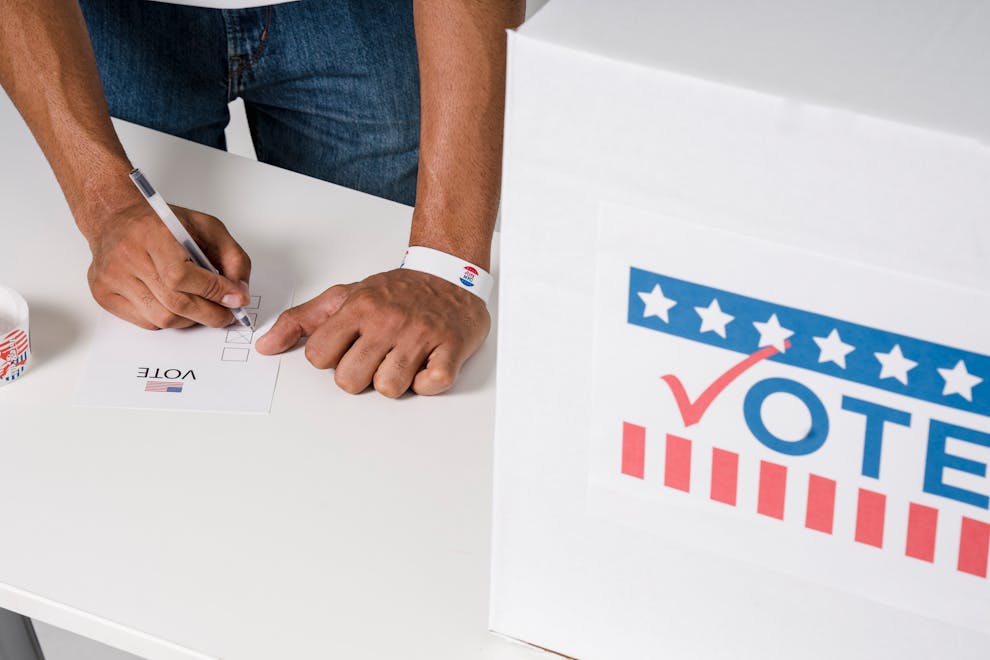

The Supreme Court has issued a 6–3 ruling that sharply limits the power of the Voting Rights Act, reshaping how states may use race when drawing congressional maps. The decision struck down Louisiana’s second majority‑Black district, ruling that lawmakers relied too heavily on race when redrawing boundaries.
The majority opinion, written by Justice Samuel Alito, declared the map an unconstitutional racial gerrymander. He argued that Section 2 does not justify creating additional majority‑minority districts unless strong evidence shows intentional discrimination.
The Voting Rights Act Weakened: A Shift in Legal Standards
The ruling raises the bar for proving vote dilution. The Court’s conservative majority said plaintiffs must now show a “strong inference” of intentional discrimination, a standard far more difficult to meet.
Justice Elena Kagan, writing in dissent, warned that the decision “renders Section 2 all but a dead letter,” arguing that states can now dilute minority voting power with fewer legal consequences.
National Implications
The ruling affects far more than Louisiana. Nearly 70 congressional districts nationwide rely on Section 2 protections. The decision could encourage states to redraw maps in ways that reduce Black and Latino representation.
Because many 2026 filing deadlines have passed, the most immediate effects may not be felt until the 2028 cycle. Still, the ruling gives states new latitude to reshape political power.
The Voting Rights Act Weakened: Reaction From Lawmakers and Advocates
Democrats across the country condemned the ruling. Illinois Gov. JB Pritzker called it “voter suppression that will silence Black and brown voters,” while Sen. Tammy Duckworth described it as a “crushing blow to our democracy.”
Former President Barack Obama said the Court appears intent on abandoning its role in protecting equal participation.
What Comes Next
Voting‑rights groups say the ruling will make future challenges far more difficult. States may now defend maps by arguing that race played no intentional role, even when minority voting power is diluted.
Legal experts note that the decision continues a decade‑long trend of weakening the Voting Rights Act, following earlier rulings that removed federal oversight and limited enforcement tools.
Discover more from Unheard Voices Magazine®
Subscribe to get the latest posts sent to your email.












New Jersey mom demands answers after 4‑year‑old son died at daycare

Dr. Bernice King says Nolan Wells’ death mirrors Uncle A.D. King’s mysterious death

Earth, Wind & Fire Drummer John Paris is now in rehab following hospitalization

Black Public Media to premiere “The Morgue Twins,” spotlighting twin NYC mortuary technicians

Teen brother to donate lifesaving bone marrow to younger sister battling sickle cell

Strangers raise $10,000 in 48 hours for Las Vegas piano tuner after viral video

VP of Detroit funeral home found dead days after family said mother was mistakenly cremated

Black Aerospace Professionals Development Director Haifa Baptiste dies in Costa Rica flash flood

Mississippi police make second arrest in death of Black woman found hanging from tree

Sister Betsy Jean Farrakhan, eldest daughter of Minister Louis Farrakhan, dies

Woody Shaw’s Avant‑Garde ‘Song of Songs’ returns to vinyl after 50 years through Jazz Dispensary’s Top Shelf Series

Kansas City’s Copper Boyz Ranch provides youth violence‑prevention through horsemanship

Nolan Wells’ family demands ‘thorough’ investigation: “What we’ve been told does not make sense”

Peabo Bryson, Grammy‑winning voice behind two Disney classics, dies at 75

OWN greenlights first-ever ‘Belle Collective’ spinoff Belle Collective: Birmingham





-
 Culture4 days ago
Buried history: Documentary uncovers Black slave cemetery hidden under Staten Island shopping center
-

 Social Justice4 days ago
Justice for Nolan Wells Reward Fund raises $300k
-
Social Justice6 days ago
Atlanta University Center students marched to demand justice for Nolan Wells
-

 Black and Missing5 days ago
What happened to Chantel Brooks? Police, family continue to seek answers for woman missing since July
-
 Crime & Justice1 week ago
Former Sheriff’s Deputy found not guilty of manslaughter in fatal shooting of Airman Roger Fortson
-
 Social Justice5 days ago
Nolan Wells’ family, national leaders renew call for federal investigation into teen’s death
-
 Crime & Justice1 week ago
Former police officer Amber Guyger granted parole 7 years after conviction for murder of Botham Jean
-

 In Memoriam2 weeks ago
Angela Stribling, BET host and D.C. radio icon, dies at 58 after cancer battle