
Black Excellence
Thirteen Little‑Known Black History Facts
These lesser‑known stories highlight innovators, scholars and community leaders whose work shaped national progress..

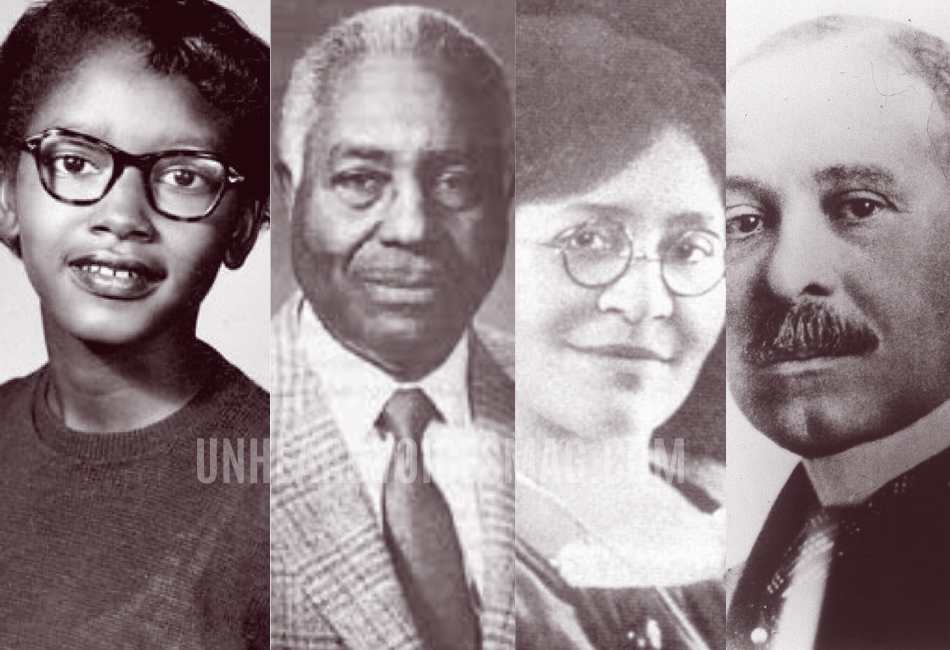

Carter G. Woodson created Black History Month to force the nation to confront the stories it had long ignored. A century later, his call to spotlight Black achievement still meets a public reckoning with how much history and facts remains overlooked.
Thirteen Little‑Known Black History Facts Reveal Overlooked Legacies
These lesser‑known stories highlight innovators, scholars and community leaders whose work shaped national progress. Although some names appear in textbooks, many of their contributions remain underreported. Educators argue that expanding these stories helps deepen public understanding.
We at Unheard Voices are taking a moment to lift up the stories that rarely get the spotlight. We’re shining attention reminding readers that Black history is bigger, bolder, and far more surprising than the versions most people grew up with.
Moreover, that Black History is American History. Here are 13 facts about Black Americans who have made significant contributions to this country.
1. Black History Facts: Annie Turnbo Malone Built a Beauty Empire Before Madam C.J. Walker
Annie Turnbo Malone created one of the earliest national hair‑care companies. She developed products for textured hair and trained thousands of sales agents. Her Poro College campus in St. Louis offered classrooms, dorms and a large auditorium. It also served as a cultural hub for Black families during segregation.
Although Madam C.J. Walker later became more widely known, Malone’s earlier success shaped the industry. She built a business model that centered economic independence for Black women. Many historians now credit her with laying the foundation for modern beauty entrepreneurship.
2. Renée Poussaint Broke Barriers in Network News and Preserved Black Memory
Renée Poussaint became one of the first Black women to anchor a national network news program, stepping into a role that had long excluded Black journalists—especially Black women. As a correspondent for CBS and ABC, she reported on civil‑rights battles, global conflicts, and cultural milestones with a clarity that challenged newsroom assumptions about which stories deserved national attention.
Poussaint later co‑founded the National Visionary Leadership Project, one of the first major oral‑history archives dedicated to Black elders. She recorded the life stories of artists, activists, and community leaders whose experiences rarely reached mainstream institutions. Although she worked in an industry that often sidelined Black women, she built a career that expanded the public record. Historians now credit her with reshaping how American media documents Black life and legacy.
3. Black History Facts: Dr. Daniel Hale Williams Performed the First Successful Open‑Heart Surgery
Dr. Daniel Hale Williams completed a groundbreaking heart operation in 1893. He repaired a patient’s chest wound without X‑rays, antibiotics or modern surgical tools. His success drew national attention and helped advance cardiac care.
Williams later founded Provident Hospital in Chicago. It became one of the first Black‑owned and Black‑staffed hospitals in the country. The institution trained nurses and doctors who faced discrimination at other facilities. His leadership strengthened medical access for Black communities during a period of deep segregation.
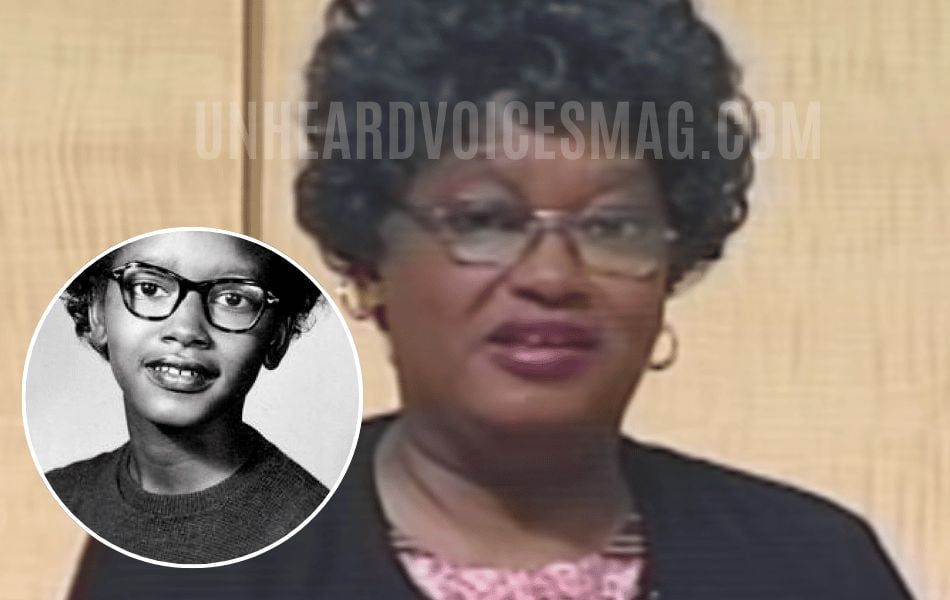
4. Claudette Colvin Took a Stand Before the Montgomery Bus Boycott
San Francisco Public Library, CC BY 3.0 <https://creativecommons.org/licenses/by/3.0>, via Wikimedia Commons
Claudette Colvin refused to give up her seat to a white passenger on a Montgomery bus in 1955, nine months before Rosa Parks’ arrest. Her defiance led to her arrest at age 15 and helped lay the groundwork for the legal challenge that ultimately struck down bus segregation.
Colvin’s testimony became central to Browder v. Gayle, the federal case that ended segregated seating. Although she faced stigma and was largely erased from early civil‑rights narratives, she continued speaking about her role for decades. Historians now credit her with helping shift the nation’s understanding of youth activism and resistance.
5. Nathan “Nearest” Green Taught Jack Daniel the Art of Distilling
Nathan “Nearest” Green, an enslaved distiller, trained Jack Daniel in whiskey production. Oral histories and archival records confirm his role in shaping the Tennessee whiskey process. Green used charcoal filtering techniques that became central to the brand’s flavor.
For years, his contributions remained unrecognized. However, recent research has restored his place in American spirits history. His legacy now anchors efforts to honor Black expertise in early distilling traditions.
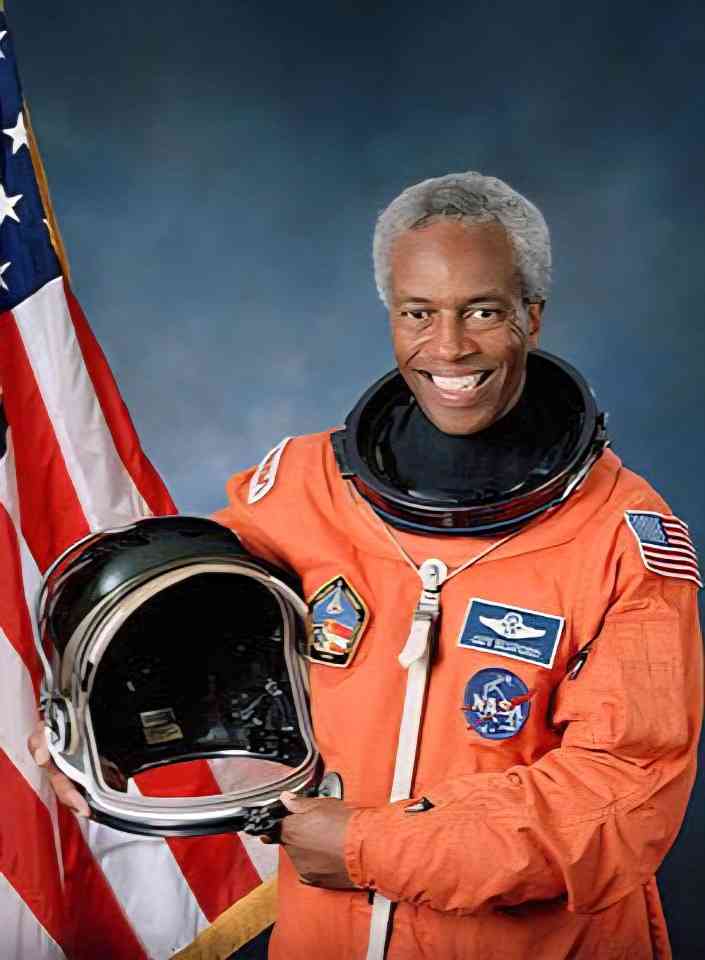
6. Guion “Guy” Bluford Became the First Black Person Launched Into Space
Public Domain via Wikimedia Commons
Guion S. Bluford Jr. made history in 1983 when he became the first Black astronaut to travel into space, serving as a mission specialist aboard the Space Shuttle Challenger. An aerospace engineer and Air Force pilot, Bluford brought deep technical expertise to NASA, contributing to satellite deployments, scientific experiments, and defense‑related missions.
Before joining NASA, Bluford flew 144 combat missions in Vietnam and earned a doctorate in aerospace engineering. Over the course of four shuttle flights, he logged more than 688 hours in space—opening doors for future generations and expanding the nation’s understanding of what was possible.
7. Black History Facts: The Chicago Defender Helped Launch the Modern Civil Rights Movement
The Chicago Defender used national distribution to expose racial violence and segregation. The newspaper encouraged Black families to move north during the Great Migration. Its reporting challenged discriminatory laws and highlighted community achievements.
Because the paper reached readers across the country, it shaped early civil rights organizing. Many activists credit the Defender with building momentum for later national movements. Its influence continues to guide Black journalism today.
8. Bill Pickett Invented Techniques Still Used in Rodeo Culture
Bill Pickett created the “bulldogging” technique, now known as steer wrestling. He performed in national shows and became a global draw. His skill and showmanship helped shape early rodeo culture.
Although many rodeo traditions trace back to Black cowboys, their stories often remain overlooked. Pickett’s legacy highlights the deep influence of Black ranchers and performers in Western history. His techniques still appear in modern competitions.
9. Carter G. Woodson Laid the Foundation for Black History Month
Carter G. Woodson, often called the “Father of Black History,” created the framework that later became Black History Month. In 1926, he launched Negro History Week to highlight Black achievements ignored by mainstream education. His initiative expanded nationwide and eventually grew into the month‑long observance celebrated today.
Woodson also founded the Association for the Study of Negro Life and History and launched the Journal of Negro History. Educators say his work reshaped how the nation understands its past, insisting that Black history is essential to American history—not an add‑on. His legacy continues to guide scholarship, classrooms and cultural institutions across the country.
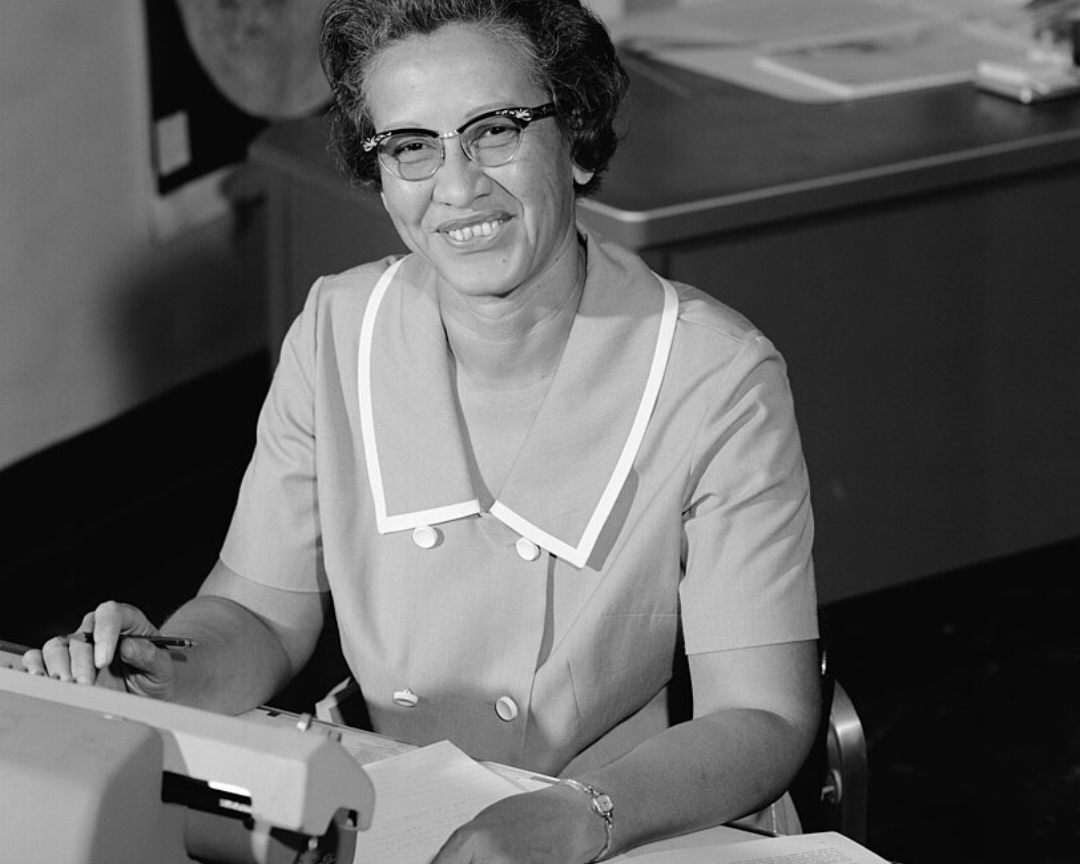
10. Katherine Johnson Calculated Trajectories for Early NASA Missions
Katherine Johnson (Photo Credit: NASA | Public Domain | https://commons.wikimedia.org/wiki/File:Katherine_Johnson_at_NASA,_in_1966.jpg)
Katherine Johnson’s calculations guided the Mercury and Apollo programs. She verified orbital paths and re‑checked complex equations by hand. Her precision supported some of the nation’s most historic flights.
Johnson worked during a period when Black women faced significant barriers in science. Despite these challenges, she became one of NASA’s most trusted mathematicians. Her story gained wider recognition after the release of “Hidden Figures,” which highlighted her contributions.
11. Dr. Walter McAfee Calculated the Math That Made Space Communication Possible
Dr. Walter McAfee, a physicist and mathematician, performed the critical calculations that proved a radar signal could reach the moon and return to Earth. His work made “Project Diana” possible in 1946—the first successful Earth‑to‑moon radio communication and a breakthrough that laid the groundwork for satellite technology, deep‑space tracking and modern telecommunications.
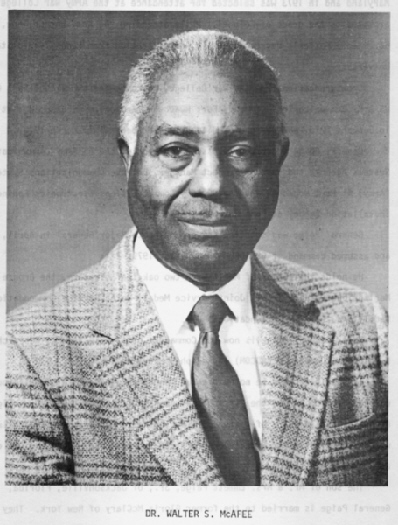
Dr. Walter McAfee, Public domain image
McAfee spent decades at the U.S. Army Signal Corps Engineering Laboratories, where he advanced research in radar, antennas and electromagnetic theory. Despite working behind the scenes, his contributions were foundational to America’s early space efforts. Historians say McAfee’s precision and vision helped open the door to the space age, even though his name rarely appears in mainstream narratives.
12. Dr. Gladys West Helped Build the Mathematical Backbone of GPS

Adrian Cadiz, Public domain, via Wikimedia Commons
Dr. Gladys West, a mathematician and programmer, produced the complex orbital models that became the foundation of today’s Global Positioning System. Working at the U.S. Naval Proving Ground beginning in the 1950s, she specialized in precise satellite geodesy—calculating the exact shape of the Earth and how gravity affects satellite motion. Her data modeling allowed GPS to deliver the real‑time accuracy the world now relies on for navigation, emergency response and global communication.
West’s career spanned more than four decades, during which she advanced computer processing, satellite tracking and large‑scale mathematical modeling. Long overlooked, her contributions gained wider recognition in the 21st century as scholars highlighted the Black women whose technical expertise shaped modern computing. Historians say West’s work quietly transformed daily life, proving that innovation often begins far from the spotlight.
13. Sam Mills Became One of the Shortest—and Most Dominant—Linebackers in NFL History
Sam Mills, a 5‑foot‑9 linebacker once dismissed as “too small” for professional football, became one of the most respected defensive leaders the league has ever seen. After being overlooked by NFL scouts, he starred in the USFL before joining the New Orleans Saints, where he anchored the famed “Dome Patrol” defense—widely regarded as one of the greatest linebacker units in history.
The Long Branch, New Jersey native later became the emotional core of the Carolina Panthers, both as a player and a coach. His “Keep Pounding” speech, delivered while battling cancer, became the franchise’s defining motto and a symbol of resilience across sports. Inducted into the Pro Football Hall of Fame in 2022, Mills is remembered not just for his tackles, but for his relentless spirit. His legacy proves that greatness isn’t measured in inches—it’s measured in heart, leadership and impact.
We salute these pioneers who have made an impact in shaping American history.
Real stories. Real impact. Straight to your inbox. Join thousands others. Click here to subscribe to our newsletter today!
Follow us on Facebook, X, TikTok, Instagram











Afrika Bambaataa’s legacy and controversy: Remembering the hip-hop pioneer

GoFundMe launched for family of 7‑month‑old girl killed in Brooklyn shooting

Arkansas mother fights for her life as she awaits rare dual organ transplant

Dallas barber creates sensory‑friendly haircut experiences for neurodivergent children

Florida Vice Mayor found slain at home was sister of Parkland survivor who died by suicide

Shaquille O’Neal pays for funeral costs for 12‑year‑old Jada West, Georgia officials say

New Jersey police reach $4 million settlement with children of woman killed by ex-husband, a former police officer

Asbury Park High School: Crossover event esports and history with Tina Watson

Jury awards California woman $15 million after supervisor called her n-word

Jarvis Butts sentenced to up to 60 years for murder of Na’Ziyah Harris and multiple sexual assaults

OWN greenlights first-ever ‘Belle Collective’ spinoff Belle Collective: Birmingham

Hazel Scott’s legacy returns to Harlem in free outdoor film screening

Olympic Gymnast Frederick Richard sets world record, raises $50K for Ugandan youth

Renee Ferguson, trailblazing investigative journalist, dies at 75

“AfroPoP Digital Shorts” returns to the land with “Sweet Samara,” climate and abolitionist film




-
 Crime & Justice1 week ago
GoFundMe launched for Cleveland deacon recovering after brutal attack outside church
-
 Police2 weeks ago
Memphis man sues city, police over photo taken of his deceased mother
-

 Culture2 weeks ago
Virgin Islands announces lineup for 74th annual St. Thomas Carnival Village
-
 Crime & Justice1 week ago
Kansas City woman shot five times during Uber ride
-
 Community6 days ago
Dallas barber creates sensory‑friendly haircut experiences for neurodivergent children
-
 Social Justice1 week ago
Washington D.C. Airbnb squatter sues homeowner for $500,000
-
 Community5 days ago
GoFundMe launched for family of 7‑month‑old girl killed in Brooklyn shooting
-
 Crime & Justice7 days ago
Florida Vice Mayor found slain at home was sister of Parkland survivor who died by suicide
-
 Education2 weeks ago
Asbury Park High School: History Seminar
-
 In Memoriam1 week ago
Dee Freeman, veteran actress known for The Young and the Restless and Sistas, dies at 66