
Social Justice
Before there was Colin Kaepernick, a Black female athlete also refused to stand for the national anthem
Decades before Colin Kaepernick took a knee to protest racial injustice, a courageous Black woman named Eroseanna “Rose” Robinson made a bold stand—by sitting during the national anthem.



Decades before Colin Kaepernick took a knee to protest racial injustice, a courageous Black woman named Eroseanna “Rose” Robinson made a bold stand—by sitting during the national anthem.
In 1959, during the Pan American Games in Chicago, Robinson, a high jumper and civil rights activist, refused to stand for the U.S. national anthem. Her silent protest—largely erased from mainstream memory—was a powerful act of defiance against racial segregation, war, and hypocrisy in America.
Who Was Eroseanna Robinson?
Born in 1925, Robinson was a standout athlete in the Amateur Athletic Union (AAU) during the 1940s and 1950s. She won national titles and earned a spot on the U.S. Track and Field team. But her activism extended far beyond the field. She participated in direct-action protests, including desegregation efforts at skating rinks in Cleveland, where she once left with a broken arm after facing violent opposition.
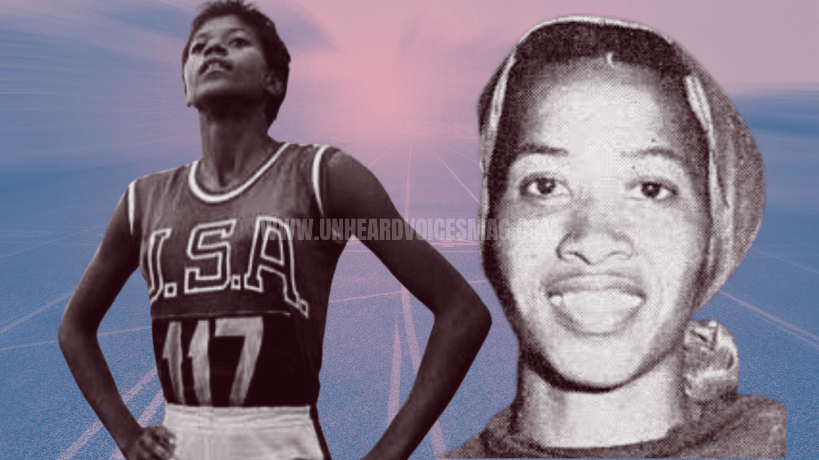
1960 JET Magazine (https://books.google.com/books/about/Jet.html?id=1bcDAAAAMBAJ#v=onepage&q=rose%20robinson%20high%20jumper&f=false)
A Protest Before Its Time
At the height of the Cold War, Robinson declined an invitation to compete in the Soviet Union, refusing to be used as a political pawn. A year later, at the Pan Am Games, she remained seated during “The Star-Spangled Banner.” To her, the anthem symbolized a nation that preached freedom while practicing oppression.
This act of resistance came nearly 60 years before Kaepernick’s 2016 protest, yet Robinson’s name is rarely mentioned in conversations about athlete activism.
Why Her Story Matters Now
As debates around patriotism, protest, and racial justice continue, Robinson’s legacy offers critical historical context. Her story challenges us to recognize the long lineage of Black athletes who’ve risked everything to speak truth to power.
In the words of historian Dr. Amira Rose Davis, Robinson “saw her athleticism and that platform as a place with which to critique the government, to critique local regulations and segregation”.
Discover more from Unheard Voices Magazine®
Subscribe to get the latest posts sent to your email.











NAACP launches National Black Man Voter Day with week of action aimed at mobilizing 100,000 Black men

Former NFL defensive end Allen Bailey dies at 37

University of Maryland Tennis Club issues public apology after racist imagery sparks backlash

Mississippi Attorney General says officer was justified in shooting that killed 1‑year‑old Kohen Wiley

Police veteran begins rare cancer fight after pleomorphic sarcoma diagnosis

VP of Detroit funeral home found dead days after family said mother was mistakenly cremated

Black Aerospace Professionals Development Director Haifa Baptiste dies in Costa Rica flash flood

Mississippi police make second arrest in death of Black woman found hanging from tree

Justice for Nolan Wells Reward Fund raises $300k

California couple welcomes rare mixed triplets weighing 19 pounds total, nearly breaking world record

Woody Shaw’s Avant‑Garde ‘Song of Songs’ returns to vinyl after 50 years through Jazz Dispensary’s Top Shelf Series

Kansas City’s Copper Boyz Ranch provides youth violence‑prevention through horsemanship

Nolan Wells’ family demands ‘thorough’ investigation: “What we’ve been told does not make sense”

Peabo Bryson, Grammy‑winning voice behind two Disney classics, dies at 75

OWN greenlights first-ever ‘Belle Collective’ spinoff Belle Collective: Birmingham





-

 In Memoriam2 weeks ago
Boston rapper Rahim “V Knuckles” Muhammad dies at 46 after fight with brain cancer
-
 In Memoriam2 weeks ago
Major Jewel McDonald, oldest known living man in the U.S., dies at 110
-

 In Memoriam2 weeks ago
Curtis Flowers, Mississippi man wrongfully convicted after being tried for the same killings 6 times, dies at 56
-

 New Jersey2 weeks ago
New Jersey mom demands answers after 4‑year‑old son died at daycare
-

 Real Voices2 weeks ago
Woman dies after stopping to help trapped driver of flipped car on interstate
-

 Health & Wellness2 weeks ago
Teen brother to donate lifesaving bone marrow to younger sister battling sickle cell
-
 Culture2 weeks ago
Black Public Media to premiere “The Morgue Twins,” spotlighting twin NYC mortuary technicians
-
 Police2 weeks ago
Dr. Anita Allen makes history as the first Black woman police chief in a Metro Atlanta city