
Crime & Justice
Tennessee death row inmate cries out in pain during execution as state reportedly didn’t disable defibrillator
Officials at Riverbend Maximum Security Institution in Nashville pronounced Byron Black, 69, dead at 10:43 a.m., about 10 minutes after he received a single dose of pentobarbital, according to the Tennessee Department of Correction.

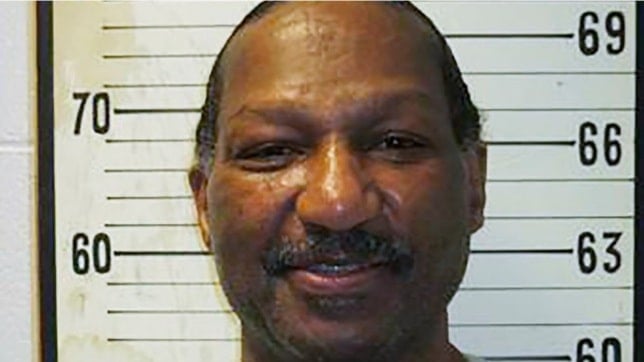

A Tennessee death row inmate cried out in pain during his lethal injection after the state reportedly refused to deactivate his implanted defibrillator.
Details: Tennessee death row inmate Byron Black executed
Officials at Riverbend Maximum Security Institution in Nashville pronounced Byron Black, 69, dead at 10:43 a.m., about 10 minutes after he received a single dose of pentobarbital, according to the Tennessee Department of Correction.
“Oh, it’s hurting so bad,” Black moaned, his hands and chest restrained, as the lethal chemicals coursed through his body. His spiritual advisor, who was singing and praying over him, whispered: “I’m so sorry. Just listen to my voice.”
What led to the conviction
Black was convicted in the 1988 triple homicide of his girlfriend, Angela Clay, 29, and her two daughters, Latoya, 9, and Lakeisha, 6. Prosecutors said he fatally shot all three in their Nashville apartment in a jealous rage. He committed the horrific crime while on work-release for shooting Clay’s estranged husband. The crime rocked the community and led to his death sentence.

Family handout
Clay’s sister, Linette Bell, issued a statement after the execution. “His family is now going through the same thing we went through 37 years ago. I can’t say I’m sorry because we never got an apology.”
Defibrillator controversy
In the weeks leading up to the execution, Black’s attorneys pleaded with the state to disable his cardioverter-defibrillator. A small, battery-powered device implanted in his chest to regulate heart rhythm, attorneys warned it could repeatedly shock him as the drugs took effect.
A trial judge issued an order last month to deactivate the device. The goal was to prevent unnecessary pain and prolonged execution. Attorney Kelley Henry said a handheld machine could disable the defibrillator.
But the Tennessee Supreme Court overturned that ruling, stating the lower court lacked authority to issue the order. Gov. Bill Lee also declined to grant clemency.
Black, who was a wheelchair user, suffered from dementia, brain damage, kidney failure, congestive heart failure, and other serious conditions. “Today, the state of Tennessee killed a gentle, kind, fragile, intellectually disabled man in a violation of the laws of our country simply because they could,” Henry said.
The medical examiner will review the defibrillator as part of Black’s autopsy.
Black’s execution was the second carried out in Tennessee since May, ending a five-year hiatus in the state’s use of capital punishment. He becomes the 28th person executed in the U.S. this year the highest annual total since 2015.
Real stories. Real impact. Straight to your inbox. Join thousands others. Click here to subscribe to our newsletter today!
Follow us on Facebook, X, TikTok, Instagram










Memphis man sues city, police over photo taken of his deceased mother

Asbury Park High School: History Seminar

New Jersey police reach $4 million settlement with children of woman killed by ex-husband, a former police officer

Druski new parody mocking conservative women sparks debate

Detroit man convicted of sexually assaulting, killing teen found dead in prison 2 weeks after sentencing

Kendrick Johnson’s parents file $10B lawsuit against federal judges

GoFundMe launched after Alabama mother is fatally shot by husband hours after giving birth

Shaquille O’Neal pays for funeral costs for 12‑year‑old Jada West, Georgia officials say

Family demands justice after Baltimore County man dies after being punched by police officer in violent encounter

12‑year‑old Georgia girl dies after fight outside school bus, family says she was bullied

OWN greenlights first-ever ‘Belle Collective’ spinoff Belle Collective: Birmingham

Hazel Scott’s legacy returns to Harlem in free outdoor film screening

Olympic Gymnast Frederick Richard sets world record, raises $50K for Ugandan youth

Renee Ferguson, trailblazing investigative journalist, dies at 75

“AfroPoP Digital Shorts” returns to the land with “Sweet Samara,” climate and abolitionist film




-
 Community2 weeks ago
Shaquille O’Neal pays for funeral costs for 12‑year‑old Jada West, Georgia officials say
-

 Education1 week ago
Asbury Park High School: Crossover event esports and history with Tina Watson
-
 Social Justice2 days ago
New Jersey police reach $4 million settlement with children of woman killed by ex-husband, a former police officer
-

 Social Justice4 days ago
Jury awards California woman $15 million after supervisor called her n-word
-

 Culture2 weeks ago
Wu‑Tang Clan concert film to screen at The Pinhook as part of Wu‑Tang Wednesday Series
-

 Social Justice6 days ago
Family pleads for Trump’s help bringing severely ill son home from Chinese prison
-
 Crime & Justice3 days ago
Detroit man convicted of sexually assaulting, killing teen found dead in prison 2 weeks after sentencing
-
 Culture2 days ago
Druski new parody mocking conservative women sparks debate
-
 Social Justice1 week ago
DOJ moves to dismiss criminal case against ex-officers charged for role in Breonna Taylor’s death
-

 In Memoriam1 week ago
In Memoriam: Beloved Showtime at the Apollo co-host Kiki Shepard