
In Memoriam
In Memoriam: Legendary singer Roberta Flack dies at 88
Flack’s publicist said in a statement that the music icon passed away peacefully Monday morning surrounded by family.

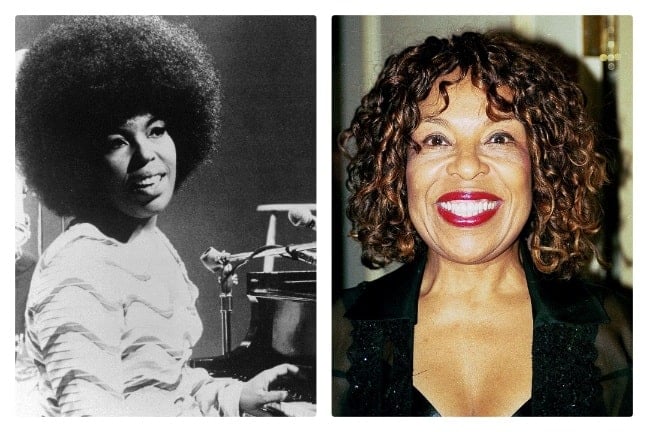

Roberta Flack, an iconic soul singer best known for her Grammy-winning hits “The First Time Ever I Saw Your Face” and “Killing Me Softly With His Song,” has died.
She was 88.
She suffered from ALS
Flack’s publicist said in a statement that the music icon passed away peacefully Monday morning surrounded by family.
No cause of death was revealed but the singer had been battling amyotrophic lateral sclerosis, or ALS.
The progressive condition, often referred to as Lou Gehrig’s disease, made it impossible for Flack to sing, her representatives said when she publicly announced her diagnosis in 2022.
Roberta Flack’s music career
Flack was born on Feb. 10, 1937 in Black Mountain, North Carolina. As daughter of a church organist, music was embedded in her and she learned how to play classic piano at the tender age of 9.
She was gifted, so much that, at only 15 years old, she received scholarship to attend Howard University in Washington, DC, where she studied music. Her time at the HBCU led to her singing and piano talents being discovered and later signed to Atlantic Records Group.
Flack was best known for 70s hits like “Killing Me Softly With His Song” and “The First Time I Ever Saw Your Face,” which launched her into stardom after Clint Eastwood used it as the soundtrack for a love scene in his 1971 movie “Play Misty for Me.”
Both songs won back-to-back Grammy Awards for Record of the Year in 1973 and 1974. Flack was the first artist to accomplish that feat.
Her other famous song is “Feel Like Makin’ Love,” which came out in 1974.
Over her career, Flack won five Grammys out of 14 nominations. She released 15 albums, her final one being the Beatles recital “Let It Be Roberta,” released in 2012.
“One of the hassles of being a Black female musician is that people are always backing you into a corner and telling you to sing soul,” she once told TIME. “I’m a serious artist. I feel a kinship with people like Arthur Rubinstein and Glenn Gould. If I can’t play Bartok when I want to play.”
Social Justice activism
Flack was a strong social justice and civil rights advocate, who always ensured there was a message behind her music.
In a 2020 interview with NPR, Flack told the outlet that “every single song I’ve recorded expressed something deep and personal to me.”
“Each was my singular focus whether in the studio or on the stage,” she added.
Discover more from Unheard Voices Magazine®
Subscribe to get the latest posts sent to your email.











Family of Cal State Fullerton student who died at unaffiliated fraternity event pushes for safety reform

Wisconsin’s Romey drops new sports anthem “W’S UP (Red & White Anthem)”

Former Baltimore State’s Attorney Marilyn Mosby’s mortgage fraud conviction formally dismissed

Clark Atlanta senior dies after driver going 94.4 MPH crashes into her car

Newly released phone records reveal how Nolan Wells’ friends privately discussed his death

VP of Detroit funeral home found dead days after family said mother was mistakenly cremated

Black Aerospace Professionals Development Director Haifa Baptiste dies in Costa Rica flash flood

Mississippi police make second arrest in death of Black woman found hanging from tree

Sister Betsy Jean Farrakhan, eldest daughter of Minister Louis Farrakhan, dies

Justice for Nolan Wells Reward Fund raises $300k

Woody Shaw’s Avant‑Garde ‘Song of Songs’ returns to vinyl after 50 years through Jazz Dispensary’s Top Shelf Series

Kansas City’s Copper Boyz Ranch provides youth violence‑prevention through horsemanship

Nolan Wells’ family demands ‘thorough’ investigation: “What we’ve been told does not make sense”

Peabo Bryson, Grammy‑winning voice behind two Disney classics, dies at 75

OWN greenlights first-ever ‘Belle Collective’ spinoff Belle Collective: Birmingham





-
 Social Justice1 week ago
Justice for Nolan Wells Reward Fund raises $300k
-
 Culture1 week ago
Buried history: Documentary uncovers Black slave cemetery hidden under Staten Island shopping center
-
Social Justice2 weeks ago
Atlanta University Center students marched to demand justice for Nolan Wells
-

 Black and Missing2 weeks ago
What happened to Chantel Brooks? Police, family continue to seek answers for woman missing since July
-
 Social Justice2 weeks ago
Nolan Wells’ family, national leaders renew call for federal investigation into teen’s death
-

 In Memoriam1 week ago
Boston rapper Rahim “V Knuckles” Muhammad dies at 46 after fight with brain cancer
-

 Music1 week ago
UK soul singer Scarlett Fagan releases video for new single ‘Awaken’
-

 In Memoriam1 week ago
Major Jewel McDonald, oldest known living man in the U.S., dies at 110