
Opinions
Jury clears deputy in taser death of Jarrel Gray, leaving family devastated
One can only imagine the reaction of the family members of Jarrel Gray and what they must have felt when the verdict came back not guilty.

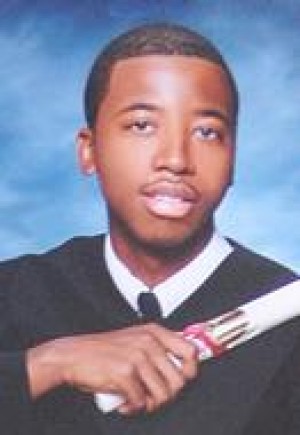

The family of Jarrel Gray said they felt devastated when a federal jury ruled that Frederick County sheriff’s deputy Rudy Torres did not use excessive force in Gray’s 2007 death. Gray, 20, died after Torres fired a Taser at him twice during a late‑night encounter in a Frederick neighborhood.
The incident began when residents called 911 to report a fight in the street. Torres responded and said Gray placed his hands in his pants, yelled, and acted out of control. Several eyewitnesses disputed that account.
Witnesses Describe the Final Moments
Eyewitness Sara Ismach said Gray tried to comply.
“‘My hands are on the ground, officer. My hands are on the ground,’ and they tasered him,” she said.
Torres fired his Taser twice. Attorneys asked why he shocked Gray again while Gray lay on the ground. Torres replied, “That’s correct,” and said he believed Gray refused to show his hands.
Gray’s parents said he had hearing problems and may not have understood the commands. They filed a $145 million lawsuit alleging excessive force.
Jury Rejects Excessive‑Force Claim
A jury of eight women and two men unanimously ruled that Torres did not use excessive force when he shocked Gray twice, including once while Gray was unresponsive. Jurors awarded no damages to Gray’s parents, Jeffrey Gray and Tanya Thomas.
Gray’s cousin, Billy Barton, said the verdict devastated the family. He noted that Gray’s grandmother worked at the Frederick County Jail, and the family had long‑standing ties to the community.
“My family didn’t bother anyone,” Barton said. “Your son is outside with friends and then someone says he is dead.”
OPINION: A System That Fails Families
The verdict in Gray’s case mirrors a pattern seen across the United States, where officers often avoid accountability after fatal encounters. The outcome reinforces long‑standing concerns about how the justice system treats Black families seeking answers after a loss.
Frederick’s history adds weight to those concerns. Older residents recall segregation and unequal treatment, and the verdict feels like another reminder of that legacy. As Dr. King said, quoting St. Augustine, “an unjust law is no law at all.” Gray’s case shows how far the system still has to go.
Remembering Jarrel Gray
Gray graduated from Frederick High School in 2005, according to his obituary. He attended Sharp Street United Methodist Church, loved the Dallas Cowboys, enjoyed music, and spent time with close friends known as “Dafellaz.” His family said he cherished time with his siblings.
Gray’s death, and the verdict that followed, continue to shape conversations about policing and accountability in Maryland.
Discover more from Unheard Voices Magazine®
Subscribe to get the latest posts sent to your email.












Family of Cal State Fullerton student who died at unaffiliated fraternity event pushes for safety reform

Wisconsin’s Romey drops new sports anthem “W’S UP (Red & White Anthem)”

Former Baltimore State’s Attorney Marilyn Mosby’s mortgage fraud conviction formally dismissed

Clark Atlanta senior dies after driver going 94.4 MPH crashes into her car

Newly released phone records reveal how Nolan Wells’ friends privately discussed his death

VP of Detroit funeral home found dead days after family said mother was mistakenly cremated

Black Aerospace Professionals Development Director Haifa Baptiste dies in Costa Rica flash flood

Mississippi police make second arrest in death of Black woman found hanging from tree

Sister Betsy Jean Farrakhan, eldest daughter of Minister Louis Farrakhan, dies

Justice for Nolan Wells Reward Fund raises $300k

Woody Shaw’s Avant‑Garde ‘Song of Songs’ returns to vinyl after 50 years through Jazz Dispensary’s Top Shelf Series

Kansas City’s Copper Boyz Ranch provides youth violence‑prevention through horsemanship

Nolan Wells’ family demands ‘thorough’ investigation: “What we’ve been told does not make sense”

Peabo Bryson, Grammy‑winning voice behind two Disney classics, dies at 75

OWN greenlights first-ever ‘Belle Collective’ spinoff Belle Collective: Birmingham





-
 Social Justice2 weeks ago
Justice for Nolan Wells Reward Fund raises $300k
-
 Culture2 weeks ago
Buried history: Documentary uncovers Black slave cemetery hidden under Staten Island shopping center
-
Social Justice2 weeks ago
Atlanta University Center students marched to demand justice for Nolan Wells
-

 Black and Missing2 weeks ago
What happened to Chantel Brooks? Police, family continue to seek answers for woman missing since July
-
 Social Justice2 weeks ago
Nolan Wells’ family, national leaders renew call for federal investigation into teen’s death
-

 In Memoriam1 week ago
Boston rapper Rahim “V Knuckles” Muhammad dies at 46 after fight with brain cancer
-

 Music2 weeks ago
UK soul singer Scarlett Fagan releases video for new single ‘Awaken’
-
 In Memoriam1 week ago
Major Jewel McDonald, oldest known living man in the U.S., dies at 110