
Politics
Supreme Court ruling allows Trump administration to end deportation protections for Syrians and Haitians
The 6–3 decision expands executive authority over TPS and restricts the ability of immigrants to challenge terminations in court.

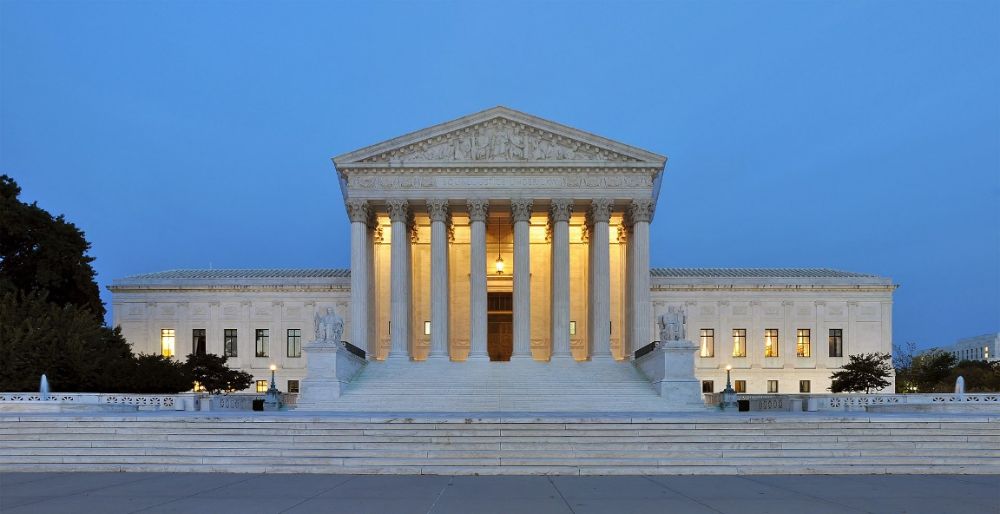

WASHINGTON — The Supreme Court ruled Thursday that the Trump administration can end Temporary Protected Status for more than 356,000 Syrians and Haitians, clearing the way for mass deportations and sharply limiting judicial review of the program.
Haitian and Syrian Supreme Court Ruling
The 6–3 decision expands executive authority over TPS and restricts the ability of immigrants to challenge terminations in court.
The ruling reverses lower‑court orders that had blocked the administration from ending TPS for over 6,000 Syrians and more than 350,000 Haitians. The Court said the TPS statute bars federal judges from reviewing decisions to extend or end protections.
Case Reaches Supreme Court After Lower Courts Blocked Termination
The case, Trump v. Miot, later consolidated to Mullin v. Doe, reached the Supreme Court after the U.S. District Court for the District of Columbia stopped the administration from ending Haiti’s TPS designation. The U.S. Court of Appeals for the D.C. Circuit declined to pause that ruling, keeping protections in place while litigation continued.
TPS allows people from countries facing war, natural disaster or humanitarian crises to live and work legally in the United States. The administration argued that conditions in Syria and Haiti no longer justified continued protections.
Court Rejects Claims of Racial Bias in Haiti Decision
The majority dismissed arguments that the administration acted with racial animus when it moved to end Haiti’s TPS designation. The Court said the record did not show unconstitutional discrimination, even though the administration’s public comments about Haitians drew widespread criticism.
The ruling could affect more than 1 million immigrants from 17 countries that received TPS due to conflict or disaster. The administration has moved to end protections for immigrants from 13 of those countries, putting many at risk of losing work authorization and facing deportation.
Dissent Warns of Harm and Improper Motives
Justice Elena Kagan issued a sharp dissent, joined by Justices Sonia Sotomayor and Ketanji Brown Jackson. She wrote that the plaintiffs “deserve better than today’s decision” and argued that the administration ended TPS without required consultations about country conditions.
Kagan also said the Haiti decision appeared influenced by “impermissible race‑based considerations,” citing the administration’s public statements.
LDF and NAACP Condemn the Haitin Supreme Court Ruling
In a public statement, The Legal Defense Fund (LDF) condemned the decision noting that the Trump’s rhetoric included claims that Haitians were “poisoning the blood” of America, references to Haiti as a “sh-thole country,” and accusations that Haitians “probably have AIDS” and “eat the pets” of U.S. residents.
LDF said the ruling allows a racially discriminatory termination of Haiti’s TPS designation to proceed. “All Black people in our country, including immigrants, are entitled to equal protection under the law,” said Brittany Carter, Assistant Counsel at LDF. “Yet the Supreme Court’s decision fails to honor this principle.”
LDF and the NAACP filed an amicus brief in April 2026 urging the Court to uphold the lower‑court ruling that blocked the terminations. They argued that ending TPS would cause severe harm to Haitian nationals, their families and their communities. The brief accused the President of using race‑based statements about Haitians and Black immigrants. They noted that the Constitution protects every person — regardless of immigration status — from racial discrimination by the government.
Discover more from Unheard Voices Magazine®
Subscribe to get the latest posts sent to your email.















Late Cambridge professor Jason Arday cleared of plagiarism again

Black Public Media’s “AfroPoP” series presents 100th film: “Paradox,” which confronts Minneapolis policing history

Louisiana teen becomes first child functionally cured of sickle cell disease

North Carolina family mourns 11-year-old Kylen Baldwin killed in d hit-and-run scooter crash

Jury convicts Rodney Hinton Jr. of murder in deputy’s 2025 traffic‑detail death

VP of Detroit funeral home found dead days after family said mother was mistakenly cremated

Justice for Nolan Wells Reward Fund raises $300k

California couple welcomes rare mixed triplets weighing 19 pounds total, nearly breaking world record

Buried history: Documentary uncovers Black slave cemetery hidden under Staten Island shopping center
Atlanta University Center students marched to demand justice for Nolan Wells

Woody Shaw’s Avant‑Garde ‘Song of Songs’ returns to vinyl after 50 years through Jazz Dispensary’s Top Shelf Series

Kansas City’s Copper Boyz Ranch provides youth violence‑prevention through horsemanship

Nolan Wells’ family demands ‘thorough’ investigation: “What we’ve been told does not make sense”

Peabo Bryson, Grammy‑winning voice behind two Disney classics, dies at 75

OWN greenlights first-ever ‘Belle Collective’ spinoff Belle Collective: Birmingham





-

 Culture2 weeks ago
NXT Awards return to Atlanta Oct. 25
-

 Community2 weeks ago
Operation Christmas Child will open drop‑off locations across the U.S
-

 Entertainment2 weeks ago
OWN for the Holidays returns with new movies
-

 Real Voices2 weeks ago
Newly released phone records reveal how Nolan Wells’ friends privately discussed his death
-

 Social Justice1 week ago
Family of Cal State Fullerton student who died at unaffiliated fraternity event pushes for safety reform
-

 Music2 weeks ago
Baltimore artist MIDDEKO releases new single “FALLINLUV”
-

 Music2 weeks ago
Baron Von Alias drops “Lost In Translation” with Keith Murray and Tash
-

 Social Justice1 week ago
North Carolina A&T, UNC Greensboro and Bennett students march nearly an hour after campus voting sites removed