
Culture
Book ‘Down Neck’ native chronicles Newark’s Ironbound history in new book
One neighborhood that has been getting a lot of respect these days is the Ironbound, that Newark locale notable for some pretty tasty food and drink in the Spanish-Portuguese mode, among others.

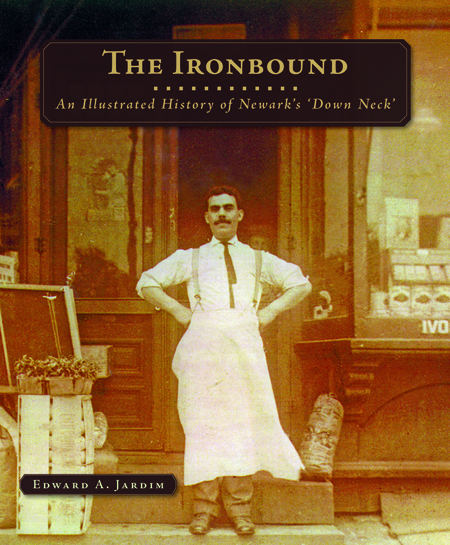

FRENCHTOWN, NJ – One neighborhood that has been getting a lot of respect these days is the Ironbound, that Newark locale notable for some pretty tasty food and drink in the Spanish-Portuguese mode, among others.
That’s not exactly the way things used to be, as a new published history informs us about this place – otherwise known as “Down Neck” – that was long regarded as being on the wrong side of the tracks.
The book is entitled “The Ironbound: An Illustrated History of Newark’s Down Neck” ($21.99, Stone Creek Publications), the work of a veteran newspaperman whose roots in the neighborhood go all the way back to the 1930s.
The author, Edward A. Jardim, traces the path by which this section on Newark’s eastern edge developed as the city grew in leaps and bounds starting early in the 19th century, giving rise to factories, schools, churches, and various social organizations. Amid burgeoning industrial activity that shaped Newark’s destiny as an urban powerhouse, the Ironbound and its labor force were poised to make a mark as a stronghold of “ethnic” identity and loyalties.
Down Neck
Even those familiar with the neighborhood may be surprised to learn that the area tucked into the “Big Bend” of the Passaic River was once considered so wild and remote that local folks referred to it as “Texas;” or that a young Thomas Edison launched his inventing career at several Ironbound locations; or that, in the decades before Prohibition, the Ironbound was a major producer (and consumer) of beer, with some 18 breweries and 140 saloons, “not to mention the dance halls of dubious propriety.” A social worker reporting on the Ironbound in 1912 suggested that it might have been more correctly named “Beer Island.”
Jardim was raised in the Ironbound and later settled with his family in Long Hill Township, N.J. His father, Vasco de Sousa Jardim, was a printer and publisher whose own ethnic identity was Portuguese, one of the many nationalities that gives the neighborhood a multicultural ambience to this day. The senior Jardim was publisher of the Portuguese-language Luso-Americano newspaper for over four decades starting in 1939. The paper is still owned by the family and operates out of offices on Ferry and Union streets in Newark.
The Ironbound: An Illustrated History of Newark’s ‘Down Neck’ is available for sale at amazon.com, ironboundbook.com, and the Luso-Americano Bookstore at 88 Ferry Street, Newark, NJ 07105.
(User submitted)
Discover more from Unheard Voices Magazine®
Subscribe to get the latest posts sent to your email.















Family prepares to bury two young Daytona Beach brothers found dead in pond

Xavier Ochsner College of Medicine earns preliminary accreditation, becoming nation’s fifth historically Black medical school

New Jersey woman who outsmarted serial killer and escaped dies at 44

87-year-old civil rights activist brutally beaten and robbed in home invasion

Family of Cal State Fullerton student who died at unaffiliated fraternity event pushes for safety reform

VP of Detroit funeral home found dead days after family said mother was mistakenly cremated

Black Aerospace Professionals Development Director Haifa Baptiste dies in Costa Rica flash flood

Mississippi police make second arrest in death of Black woman found hanging from tree

Sister Betsy Jean Farrakhan, eldest daughter of Minister Louis Farrakhan, dies

Justice for Nolan Wells Reward Fund raises $300k

Woody Shaw’s Avant‑Garde ‘Song of Songs’ returns to vinyl after 50 years through Jazz Dispensary’s Top Shelf Series

Kansas City’s Copper Boyz Ranch provides youth violence‑prevention through horsemanship

Nolan Wells’ family demands ‘thorough’ investigation: “What we’ve been told does not make sense”

Peabo Bryson, Grammy‑winning voice behind two Disney classics, dies at 75

OWN greenlights first-ever ‘Belle Collective’ spinoff Belle Collective: Birmingham





-
 Social Justice2 weeks ago
Justice for Nolan Wells Reward Fund raises $300k
-
 Culture2 weeks ago
Buried history: Documentary uncovers Black slave cemetery hidden under Staten Island shopping center
-
Social Justice2 weeks ago
Atlanta University Center students marched to demand justice for Nolan Wells
-

 Black and Missing2 weeks ago
What happened to Chantel Brooks? Police, family continue to seek answers for woman missing since July
-

 Social Justice2 weeks ago
Nolan Wells’ family, national leaders renew call for federal investigation into teen’s death
-

 In Memoriam1 week ago
Boston rapper Rahim “V Knuckles” Muhammad dies at 46 after fight with brain cancer
-

 In Memoriam1 week ago
Major Jewel McDonald, oldest known living man in the U.S., dies at 110
-

 Music2 weeks ago
UK soul singer Scarlett Fagan releases video for new single ‘Awaken’